Salt-Damaged Plaster Repair Eastern Suburbs
Remove the plaster the salt has ruined and put back a finish made for walls that are still drying.
Salt-damaged plaster repair is the step that gives you back a wall you can live with. Rising damp carries salts out of the ground and the brickwork, and as the water evaporates from the wall’s surface, the salt is left behind in the plaster. It doesn’t leave when the damp course goes in. It keeps attracting moisture from the air, so the wall stays damp on humid days and the paint keeps lifting.
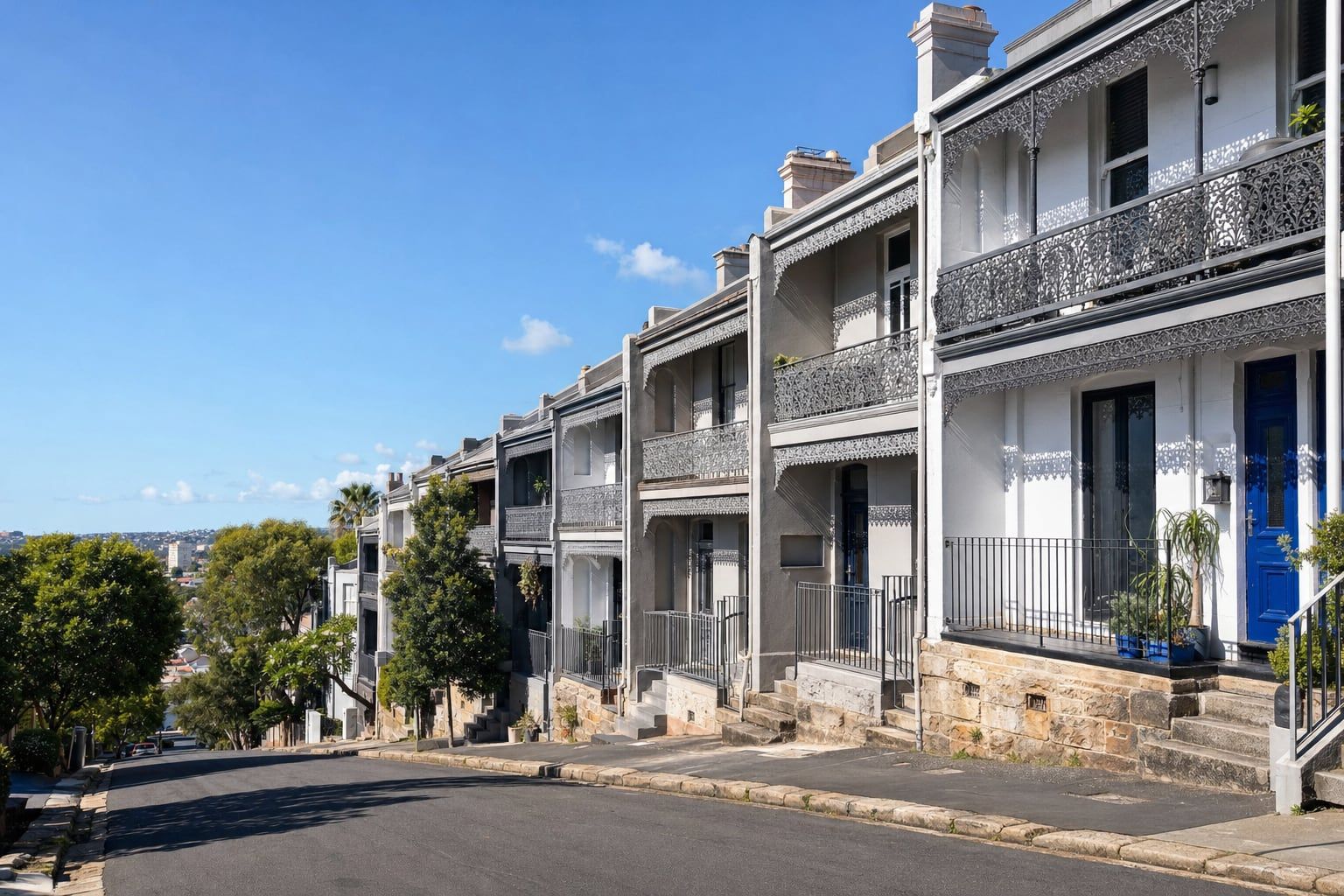
In the Eastern Suburbs, there’s a second source. Walls near the ocean at Bondi, Bronte, Clovelly, Coogee and Maroubra collect salt from sea spray and wind, which settles in external render and can work its way through.
What salt damage looks like
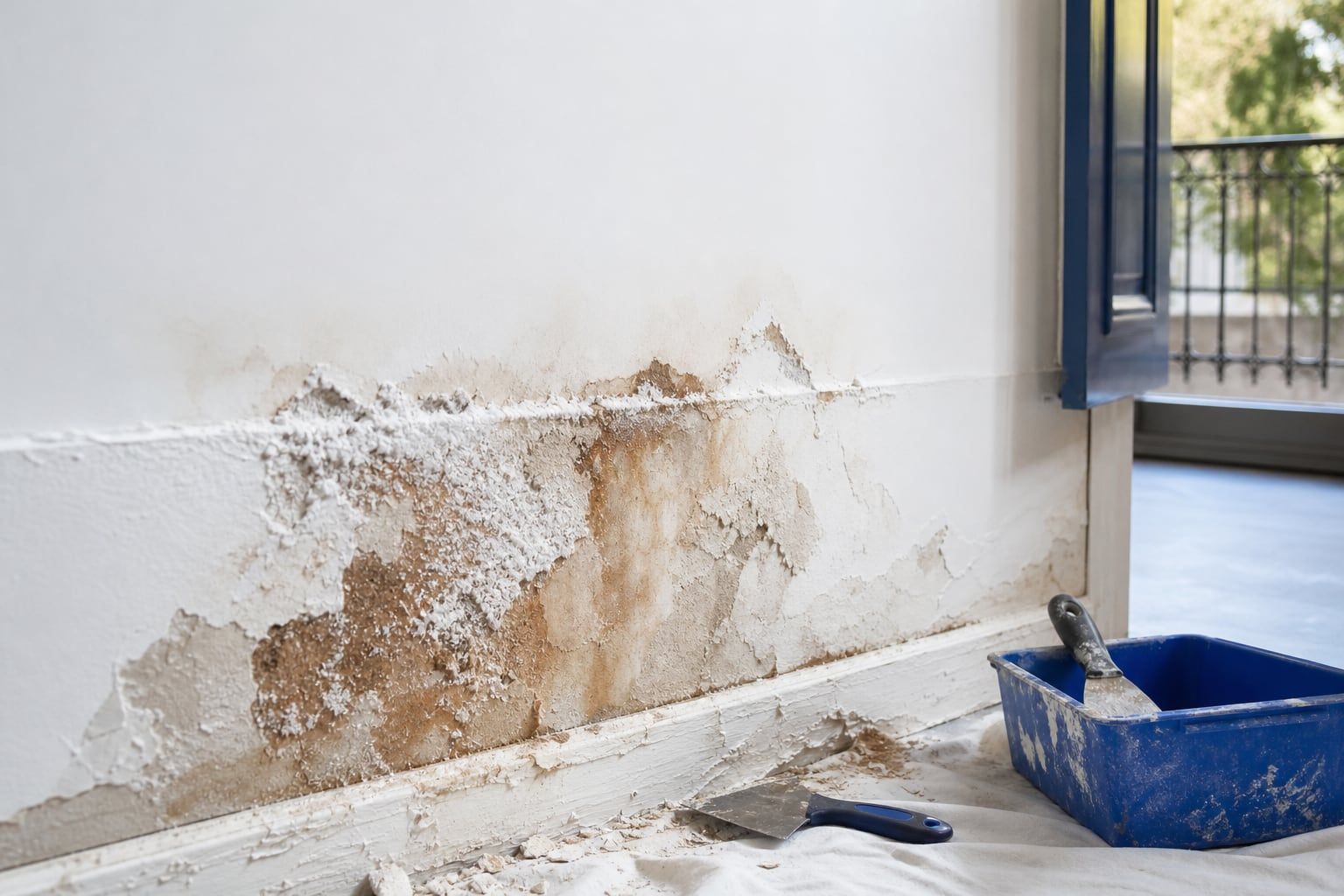
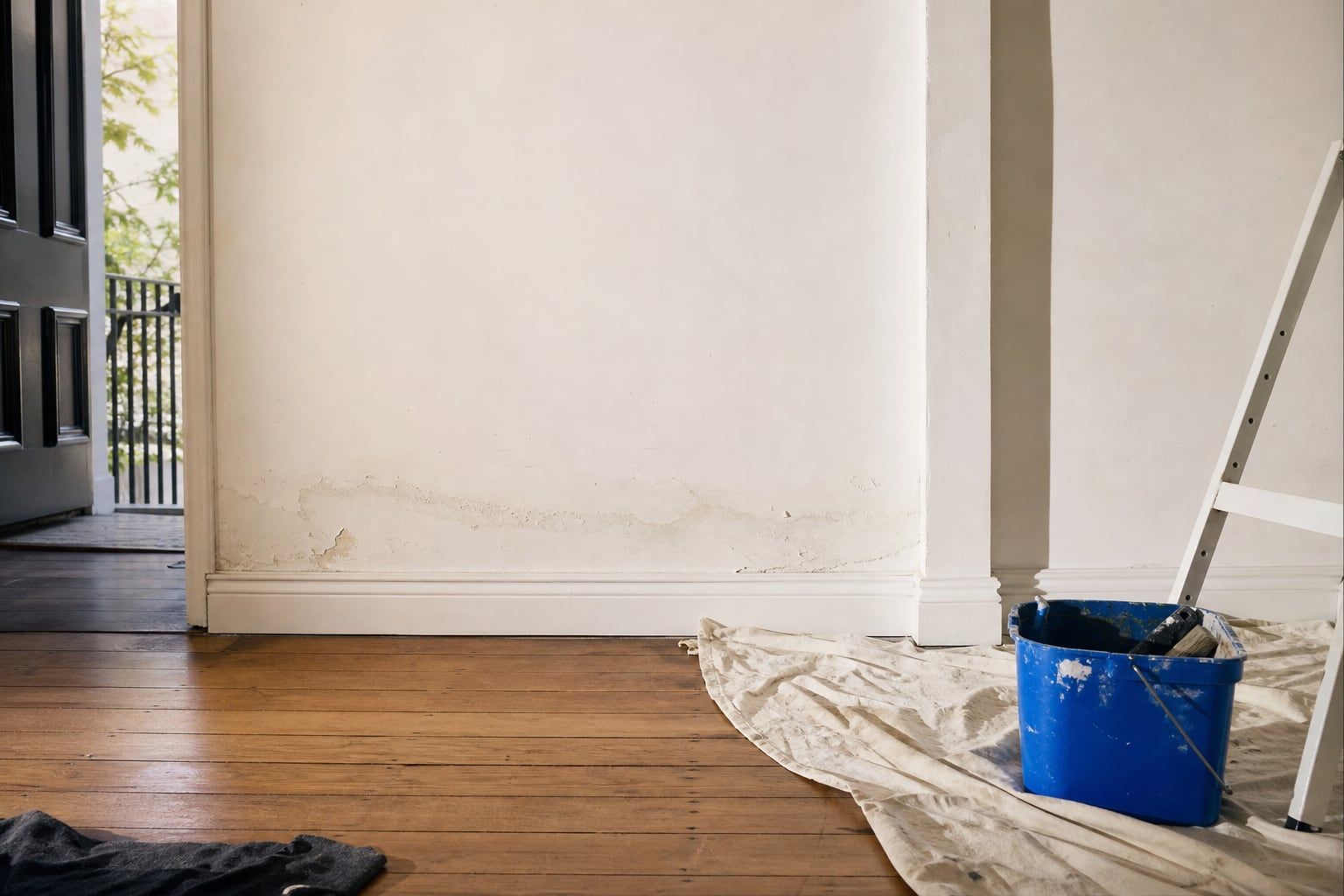
Paint bubbling or flaking near the floor, a white powdery or crystalline deposit on the wall, plaster that crumbles or sounds hollow, a brown tide mark, and skirtings rotting behind the paint are the classic signs. In older terraces with lime plaster, the plaster can turn soft and sandy. On outside render, salt shows as powdery patches and render falling away in sheets.
Our page on rising damp symptoms shows each of these.
Removing it properly
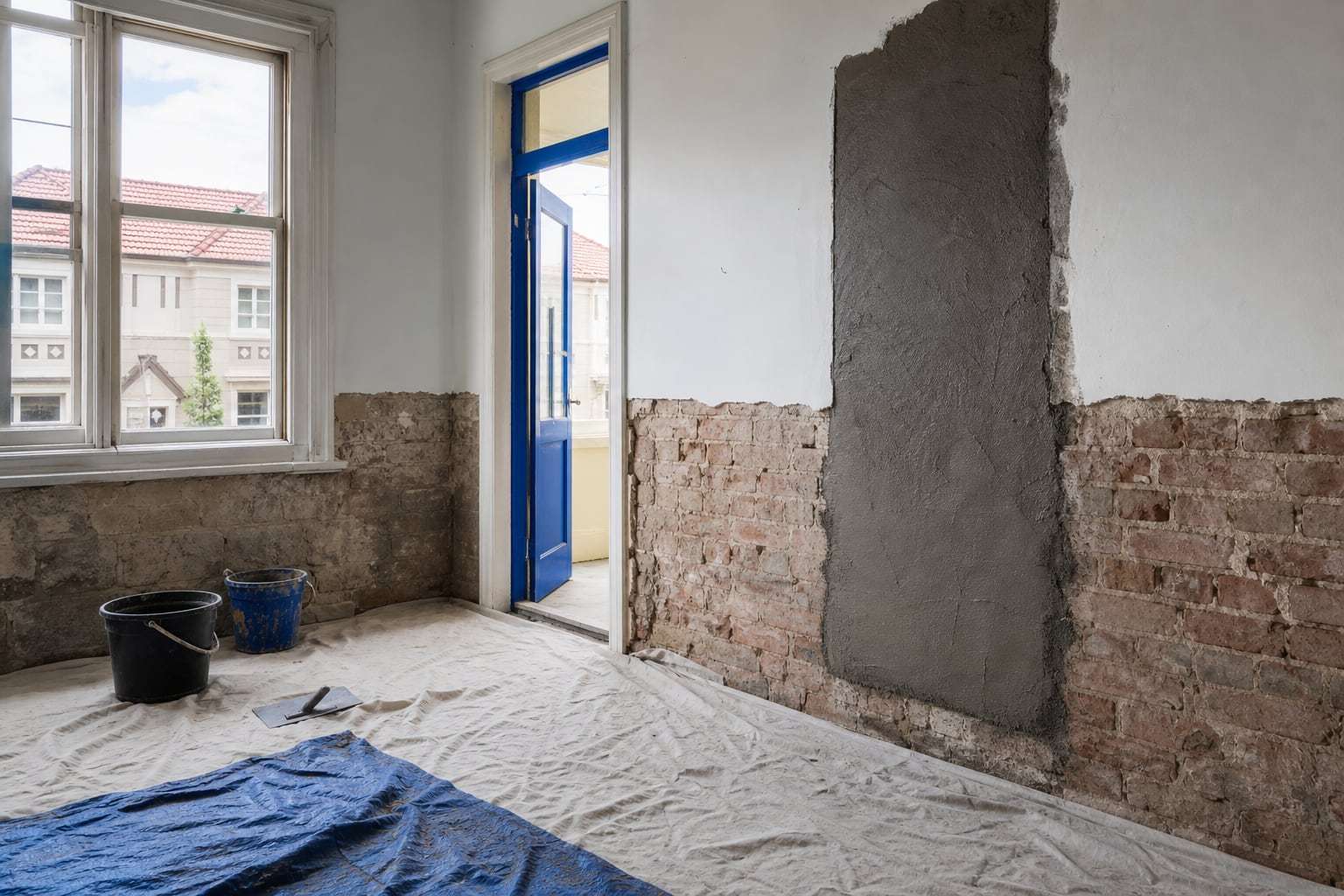
The salt usually reaches higher than the visible damage, so we test above the tide mark before deciding where to cut. All contaminated plaster is removed back to masonry in a clean line above the highest salty point. Leaving any behind means the new finish will be attacked from the edge.
The bare wall is then left to dry. A thin internal wall in a terrace dries much faster than a thick external wall or a sandstone base, and we don’t apply render to a wall that’s still too wet.
The new finish
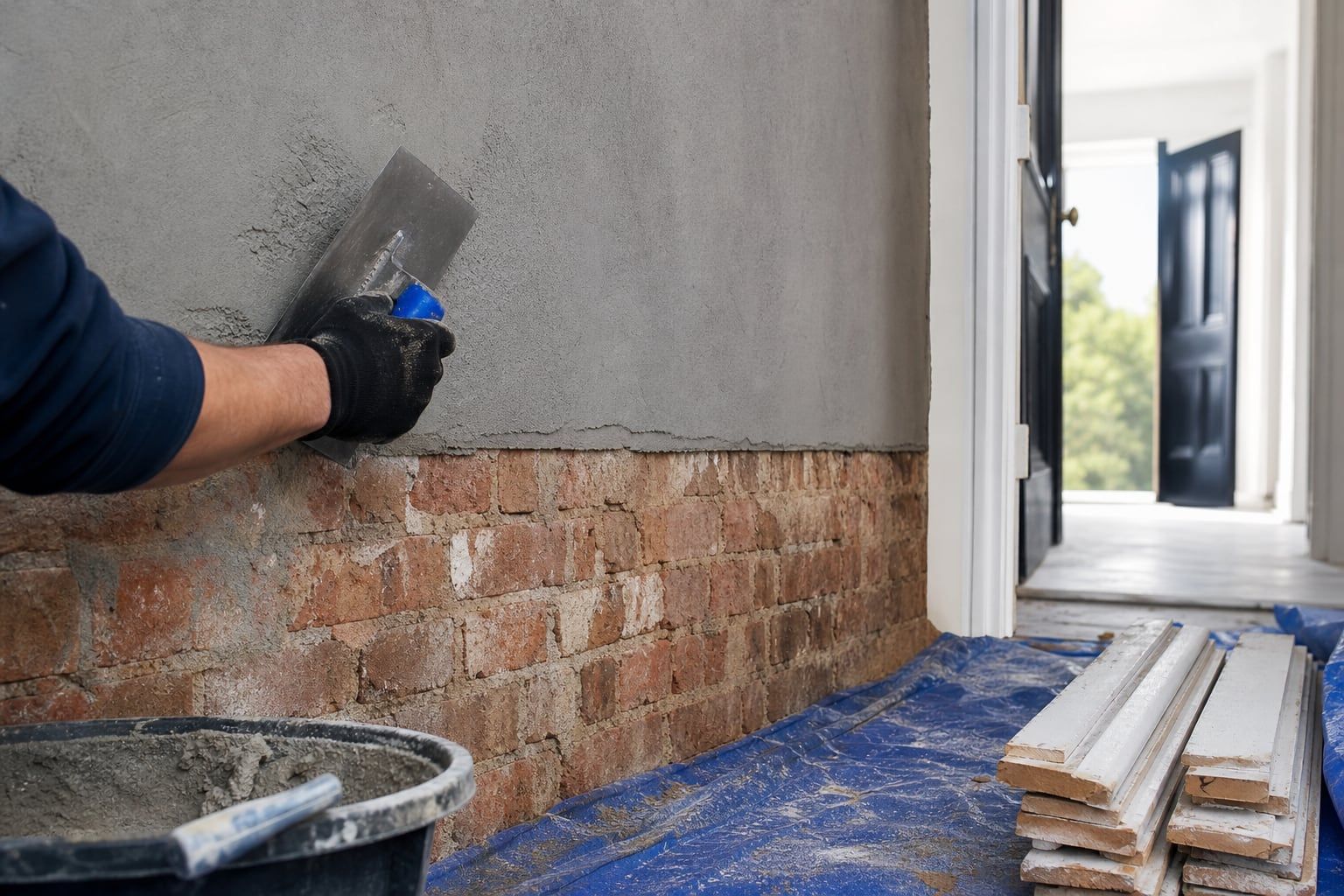
We apply a salt-tolerant render system: a breathable mix that lets the wall keep drying through it and holds any remaining salt within the render instead of letting it reach the paint. It’s finished smooth to match set plaster, or textured to match the rest of the room.
On older terraces where lime plaster survives, we can use lime-compatible finishes so the repair sits comfortably beside the original. Our guide to rising damp in terraces covers older interiors.
Choosing paint afterwards
Once the render is ready, the paint matters too. Standard acrylic paints form a tight skin that slows drying, which is the opposite of what a recently damp wall needs. A breathable mineral or vapour-permeable paint lets the wall keep giving up moisture. We’ll tell you when the render is ready and which kind of paint suits it.
Period details
Terraces and Federation homes have cornices, ceiling roses, picture rails, moulded skirtings and architraves worth keeping. We protect them during the work, cut plaster lines below cornices where possible, and replace rotted skirtings with matching profiles.
Always last
Plaster repair only lasts when the water has been stopped. It follows a damp course injection, a replacement damp course, courtyard drainage, tanking or subfloor airflow, depending on what the diagnosis found. New render over a wall that’s still getting wet will fail just like the old plaster.
Every rising damp treatment quote includes this repair, so the price covers a finished wall.
Updated
What good salt-damaged plaster repair looks like
Salt-Damaged Plaster Repair across the Eastern Suburbs
Salt-Damaged Plaster Repair in the Eastern Suburbs: step by step
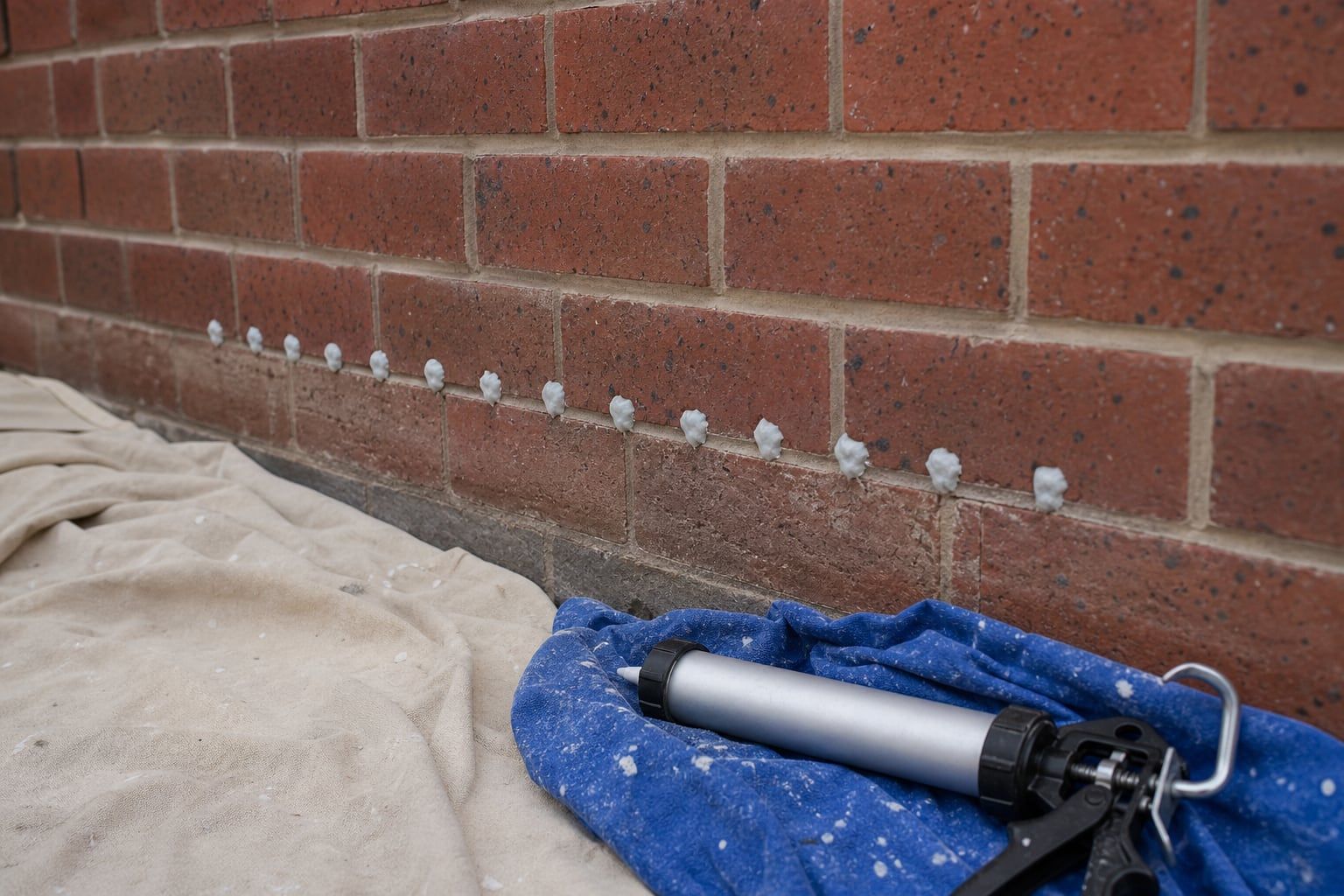
- Test for saltWe test above the visible damage to find how far the salt has really gone.
- Remove itContaminated plaster comes off back to masonry, cut in a clean line above the highest salty point.
- Let it dryThe bare wall is left to dry for a period that suits its thickness and material.
- Re-renderA breathable, salt-tolerant render goes on, finished to suit the room and ready for paint.
Salt-Damaged Plaster Repair guides for Eastern Suburbs homeowners
- Rising damp in terraces: why Eastern Suburbs terraces stay damp and how to fix themHow Victorian and Federation terraces were built, why so many now have damp walls, and how to repair them without losing their character.
- Damp in Art Deco flats: ground-floor units, strata and getting it fixedWhy ground-floor units in the Eastern Suburbs' older apartment blocks get damp walls, who is usually responsible, and how to move a repair forward.
Salt-Damaged Plaster Repair questions in the Eastern Suburbs
Something else on your mind? Call and ask.
Can I just scrape and repaint?
Not for long. The salt stays in the plaster, draws moisture out of the air and crystallises under the new paint. Within months the blisters come back.
Can you match the plaster finish in an old terrace?
Yes. We can finish smooth to match set plaster, or use lime-based finishes on older walls so the repair looks and behaves like the original.
What about salt on outside render near the beach?
Coastal walls collect salt from the air as well as from the ground. We test to see which it is, because airborne salt can sit high on ocean-facing walls with no rising damp at all.