Damp in Art Deco flats: ground-floor units, strata and getting it fixed
Why ground-floor units in the Eastern Suburbs' older apartment blocks get damp walls, who is usually responsible, and how to move a repair forward.
Damp in Art Deco flats is a familiar problem across the Eastern Suburbs. Bondi, Bondi Beach, Randwick, Coogee, Rose Bay, Bellevue Hill, Double Bay and Edgecliff are full of walk-up apartment blocks built in the 1920s and 1930s. Many are handsome buildings, with face brick, curved corners, steel-framed windows and decorative entries. But they’re also around ninety to a hundred years old, and the ground-floor units often have damp walls.
This guide explains why, how strata responsibility usually works, and what a repair involves. It’s general information, not legal advice; your strata plan and by-laws are what count for your building.
Why ground-floor units get damp
Old damp courses. Buildings of this era usually had a damp course, often a bitumen-based layer, laid in a mortar joint near the base of the walls. After many decades, many have cracked or broken down.
Raised ground outside. Gardens, paths and driveways around these blocks have often been relaid higher over the years. Where soil or paving sits above the damp course, water bypasses it. Our guide on damp courtyards and basements explains the effect.
Sloping sites. Many blocks sit on sloping streets, with ground-floor units partly below ground at the back. Water moving down through the sandy soil and along the sandstone reaches those walls.
Sealed interiors. Ground-floor units are often renovated with new plaster, acrylic paint, tiles and built-in joinery fixed against external walls. Those trap moisture and salt, so damage appears faster.
Salt air. Blocks close to the beaches at Bondi, Bronte, Clovelly and Coogee collect airborne salt in their render and brick, which can make walls read damp at the surface even without rising damp.
Signs to look for
Paint blistering along the bottom of walls, especially external and party walls, salt deposits, plaster crumbling behind skirtings, mould inside built-in wardrobes on outside walls, and a musty smell are the usual signs. Damp that sits low and is there in dry weather points to rising damp. Damp that’s higher, near windows or worse after rain points to leaks. Our page on rising damp symptoms shows the difference.
Who is usually responsible
In most older NSW strata buildings, the external walls, the walls between units, the foundations and the slab are common property, and the owners corporation is responsible for maintaining and repairing common property. Internal plaster finishes on those walls may be treated differently depending on the building’s plan and by-laws.
In practice, that usually means:
- Report the damp to your strata manager in writing, with photos and a description of where it is.
- The owners corporation arranges an inspection and decides on repairs, often through the strata committee.
- Work on common property is approved and paid for through the owners corporation.
- Don’t carry out work on common property yourself without written approval.
Every building is different, so check your strata plan, by-laws and any previous decisions about damp before assuming who pays. If there’s a dispute, NSW Fair Trading has information on strata responsibilities.
What a repair usually involves
Diagnosis. Readings on each damp wall, salt tests, and a look at the ground levels, drainage and any subfloor. A written report helps the committee understand the problem and compare quotes.
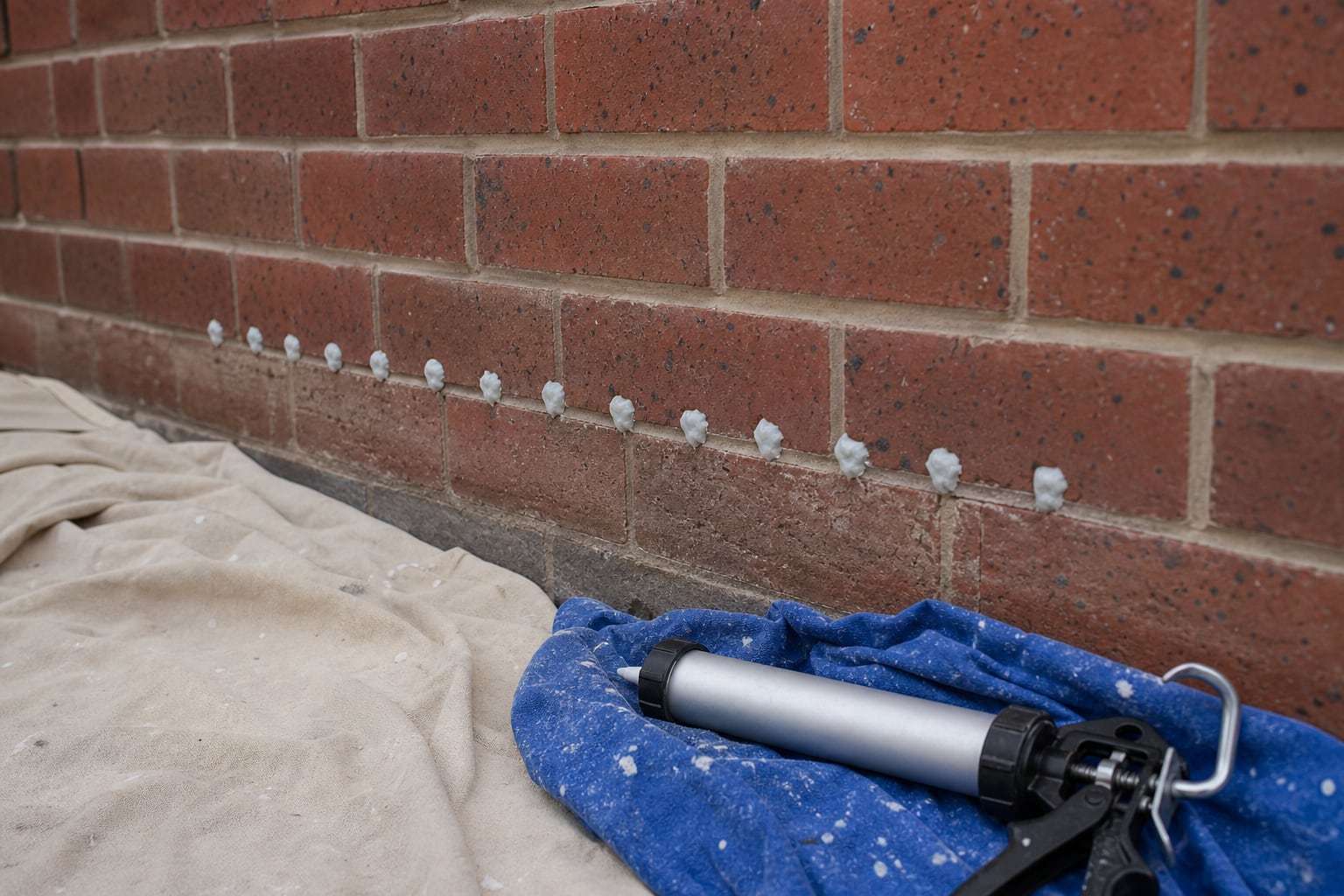
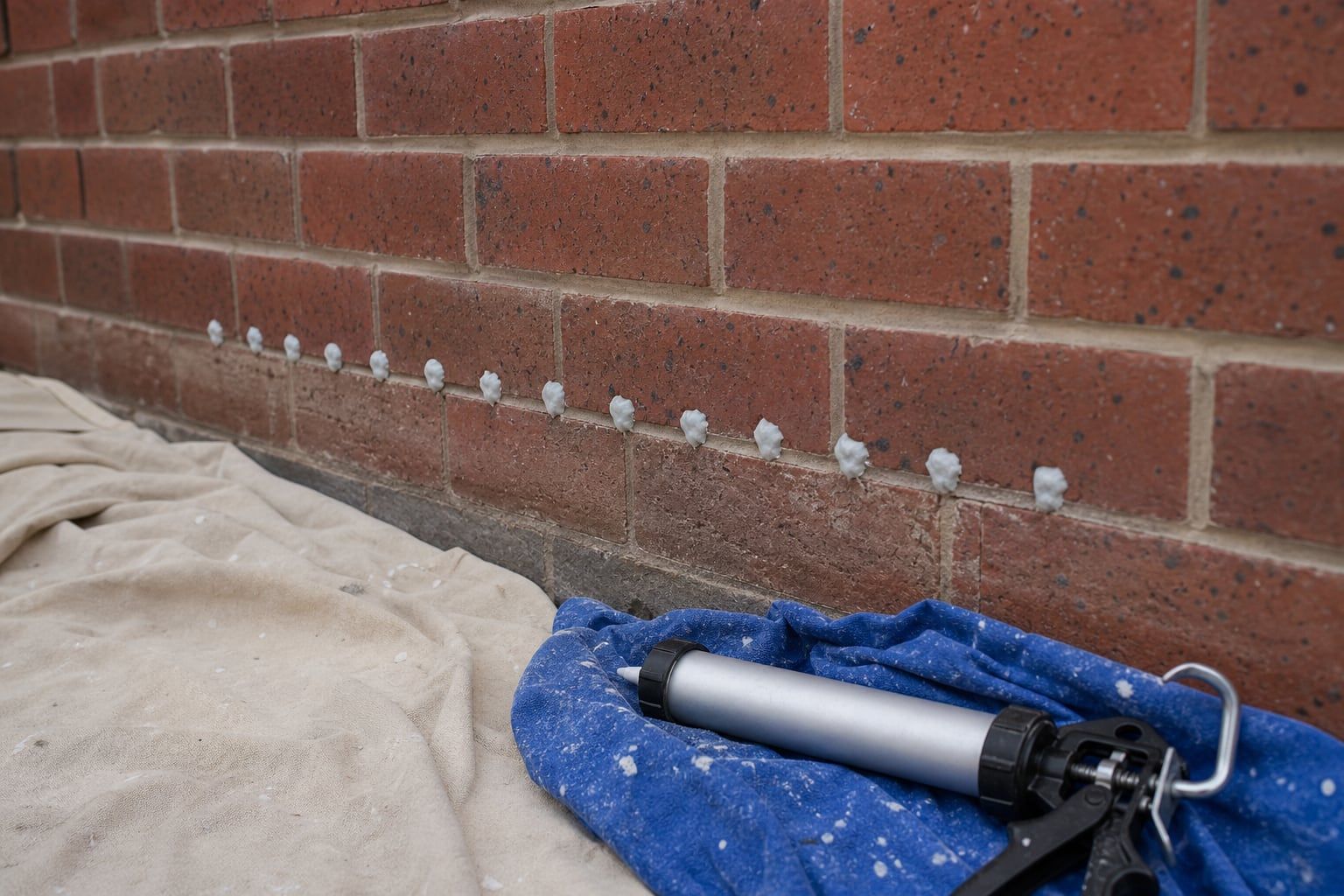
A new barrier. Most walk-up blocks are brick with sound mortar, so a chemical damp course injected along the base of the affected walls is usually suitable. It’s done from inside or outside along one mortar joint and causes relatively little disruption.
Outside works. Where garden beds, paths or driveways sit above the damp course, they need lowering or draining. Below-ground walls at the back of sloping blocks may need waterproof tanking.
Internal repairs. Salt-damaged plaster is removed and replaced with a salt-tolerant render once the walls have dried. See salt-damaged plaster repair.
Moving it forward
Strata repairs can take time, because they need committee or general meeting decisions. A clear written diagnosis with photos, readings, the cause and a scoped quote makes those decisions easier. We can provide that for your strata manager.
Upper-floor units
Damp in upper-floor units is rarely rising damp. More often it’s water coming through from a balcony, a roof, a window frame or cracked render, or condensation in rooms without enough ventilation. Those need different trades, and we’ll tell you if what we find isn’t a damp-course problem.
Getting started
If you own or manage a unit with damp walls, start by reporting it to your strata manager. If the owners corporation wants a diagnosis, we’ll inspect, measure and provide a written report and quote. Our page on rising damp treatment covers the full process, and our overview of Eastern Suburbs rising damp explains how we work.
Updated
Damp in Art Deco flats: common questions
Something else on your mind? Call and ask.
Is the owners corporation responsible for damp in my unit?
Usually, if the damp comes from common property such as the external and party walls or the slab, which in most older NSW strata plans are common property. Check your strata plan and by-laws, and raise it with your strata manager in writing.
Can I fix it myself to save time?
Not without approval if the work affects common property. Doing so can leave you paying for it and responsible for any problems. Get the owners corporation's written approval first.
Why are only the ground-floor units damp?
Rising damp comes from the ground and seldom gets above about a metre, so it mainly affects the lowest floor. Upper units are more likely to have damp from leaks, balconies or condensation.
Chemical Damp Course in the Eastern Suburbs
More guides for Eastern Suburbs homeowners
- Rising damp in terraces: why Eastern Suburbs terraces stay damp and how to fix themHow Victorian and Federation terraces were built, why so many now have damp walls, and how to repair them without losing their character.
- Damp courtyards and basements: water against Eastern Suburbs wallsHow raised courtyards, sloping sites and sandstone put water against Eastern Suburbs walls above the damp course, and the drainage and tanking that fix it.