Chemical Damp Course Eastern Suburbs
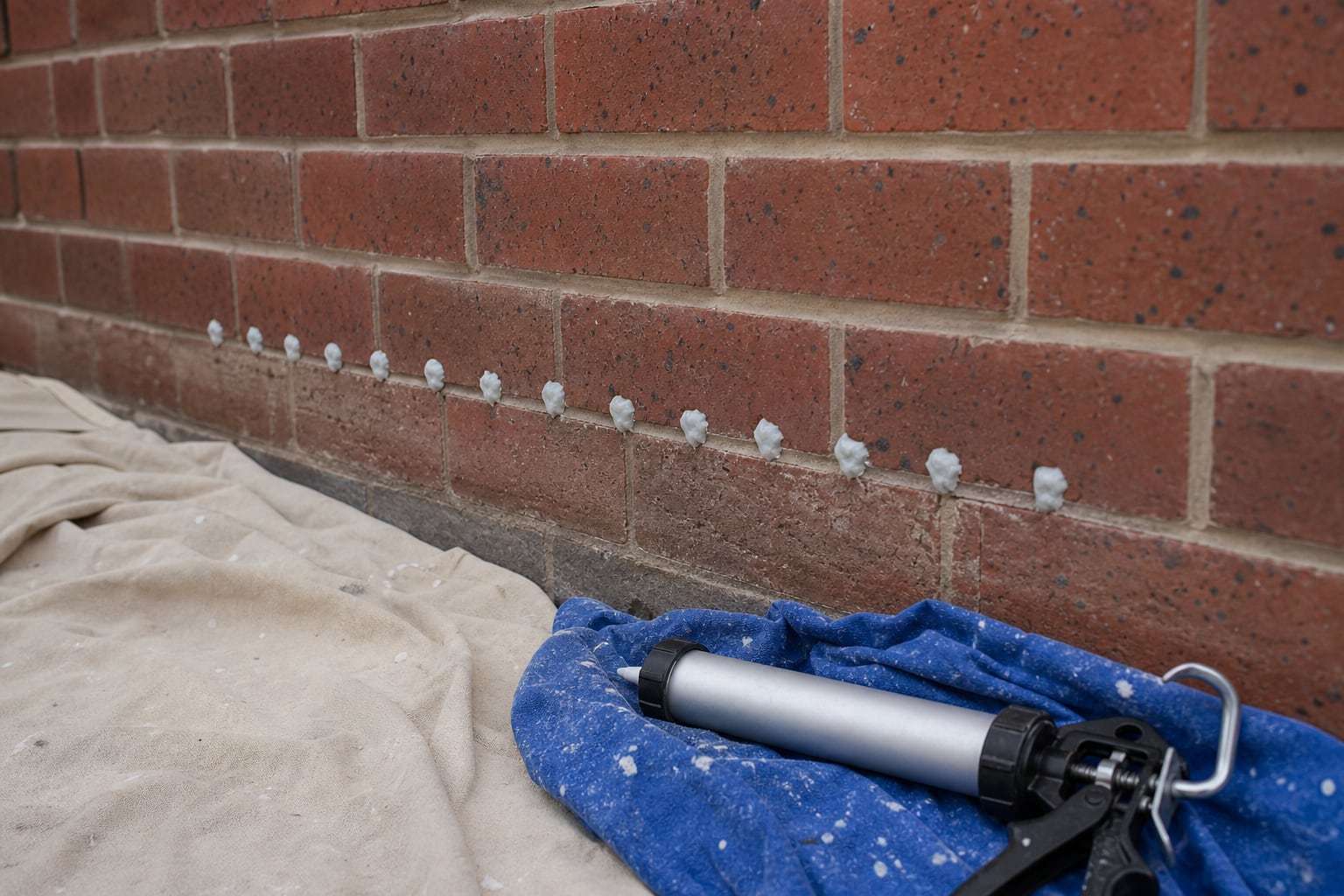
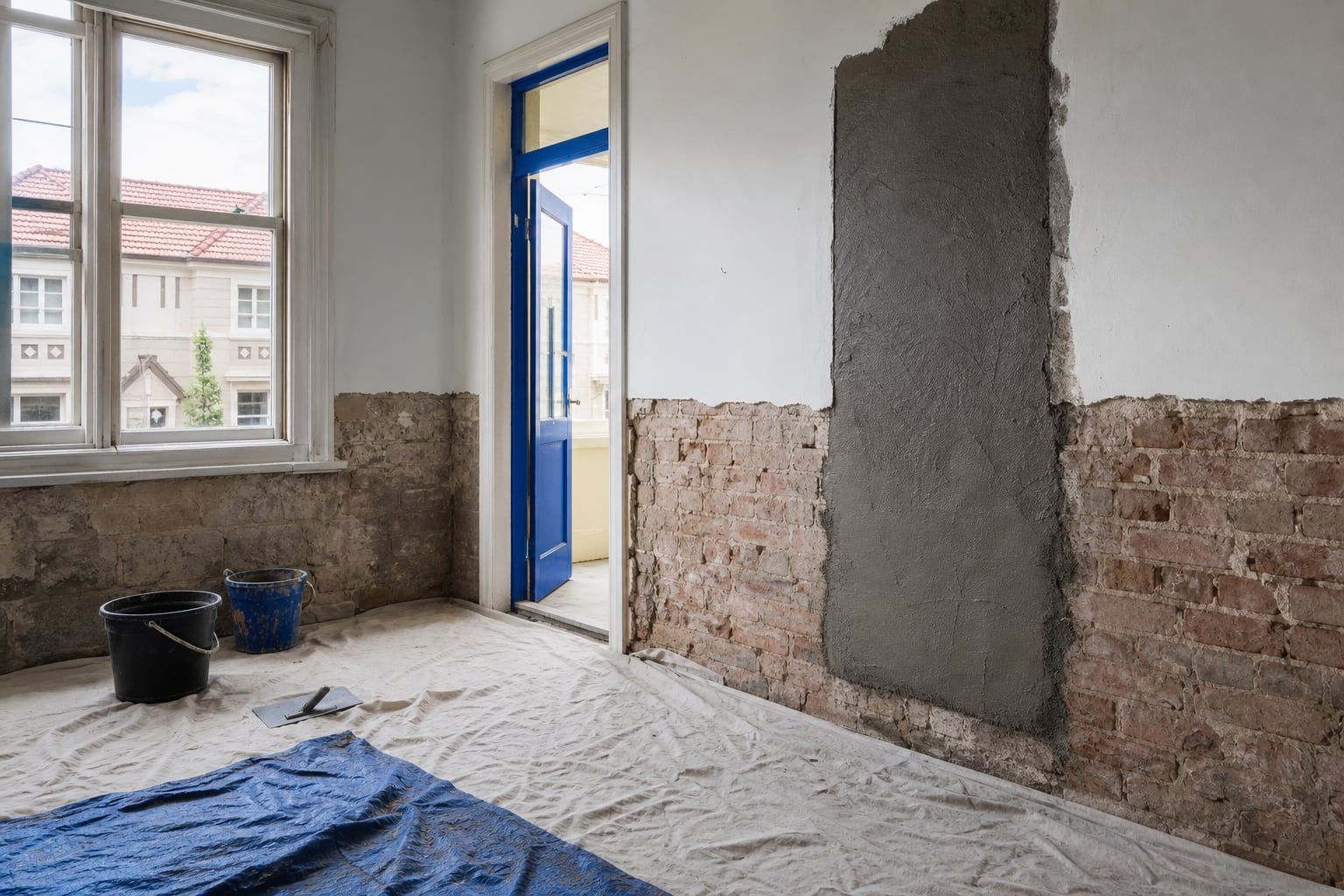
A new barrier injected into one mortar joint along the base of the wall, with the plaster made good after.
A chemical damp course is the standard repair for brick walls with rising damp, and in the Eastern Suburbs it’s often the most practical. Terraces, semis and flats here are built close together with little room to work outside, and an injected course can be put in from inside the building, along one mortar joint, without taking any bricks out.
How the barrier forms
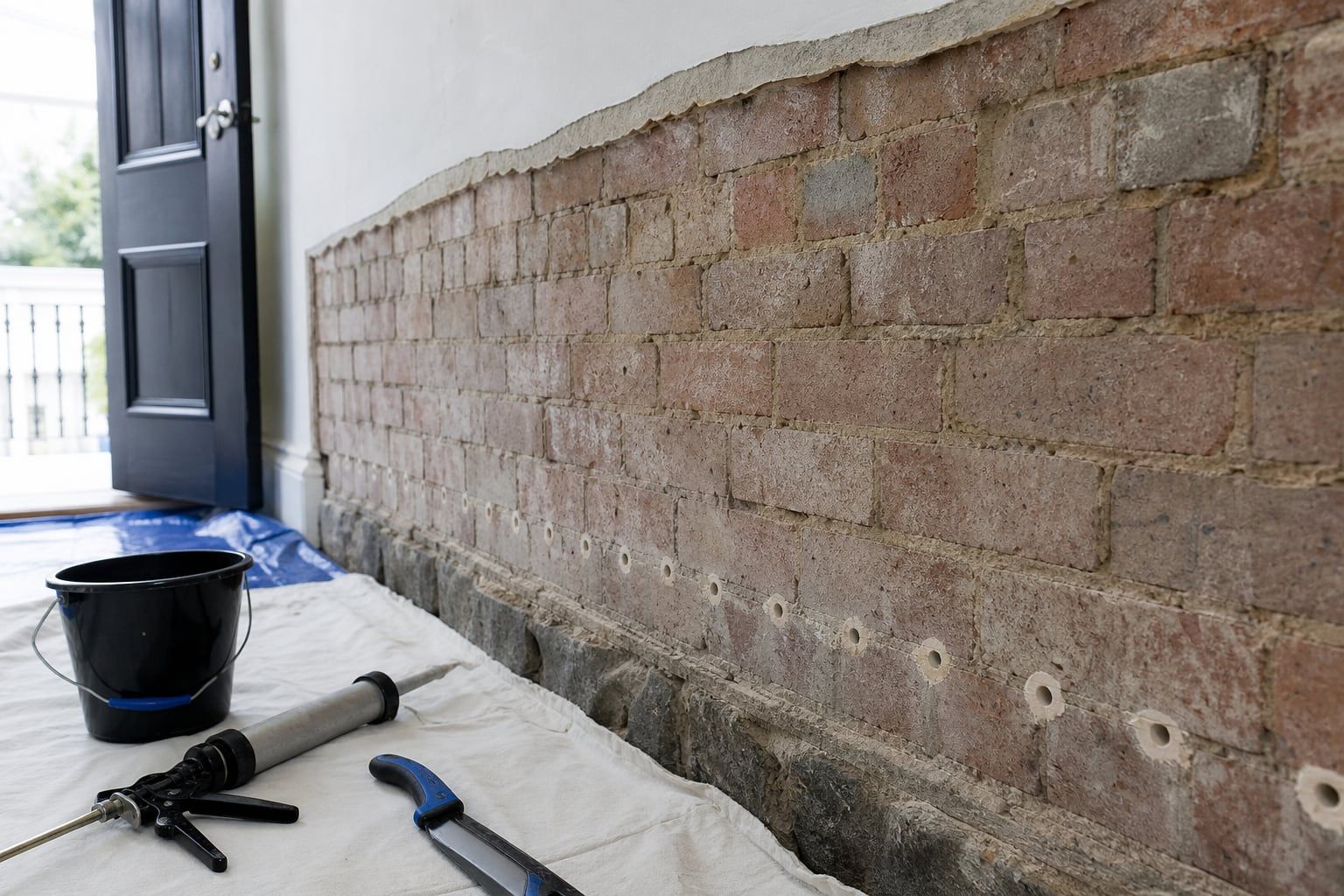
We drill a line of holes into a continuous mortar bed near the base of the wall and fill each one with a damp-proofing cream. The cream spreads sideways through the mortar, joining up between holes to form an unbroken water-repellent band. Water can no longer rise past it, and the wall above starts to dry.
Holes are small and sit in the joint. They’re filled with mortar to match, so on face brick they’re hard to pick.
Where it suits Eastern Suburbs buildings
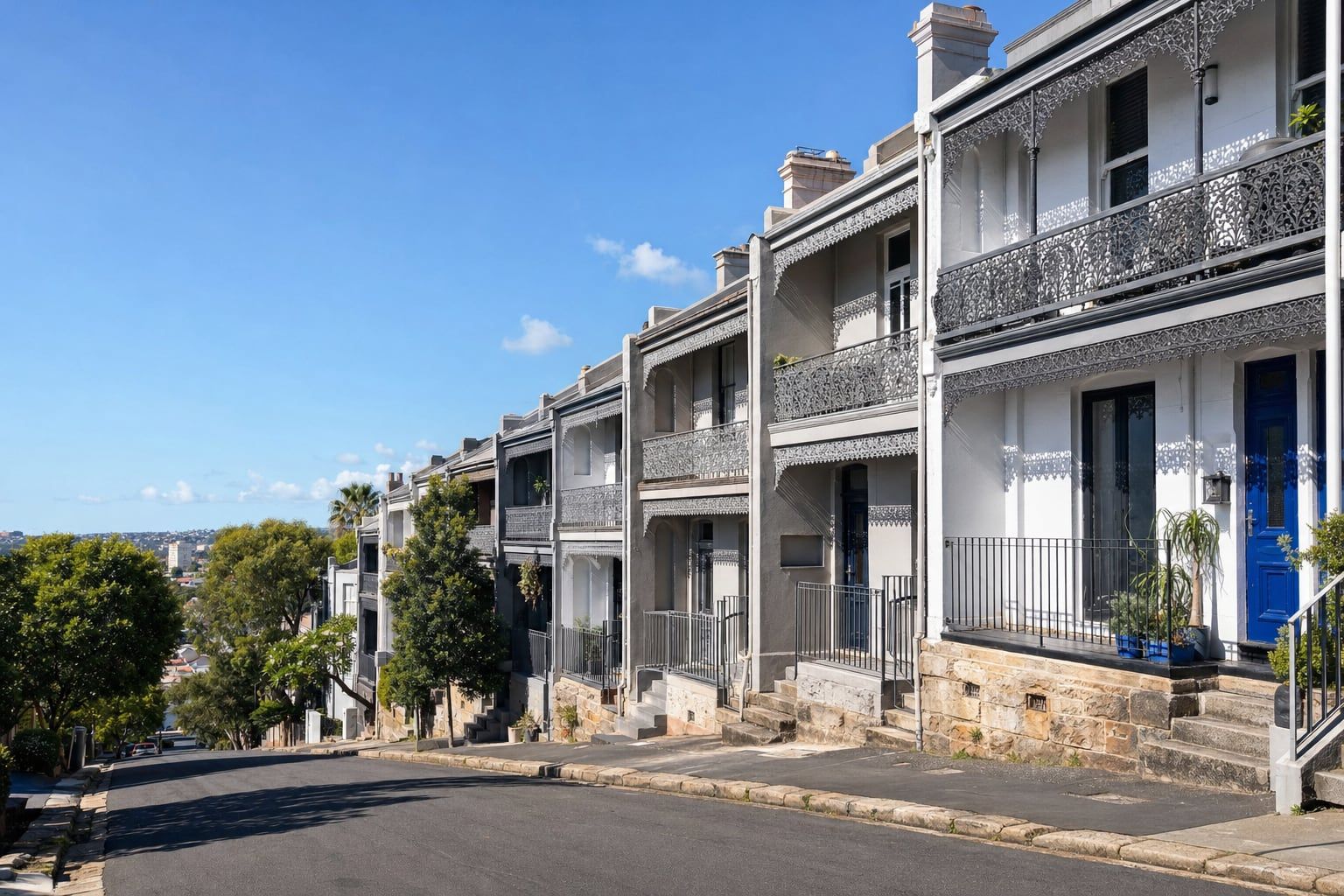
Injection works best on brick walls with sound mortar. That covers most of the Federation and inter-war houses in Randwick, Kensington, Coogee and Waverley, the brick semis of Queens Park and Bronte, the walk-up flats across Bondi, Rose Bay and Bellevue Hill, and many later terraces.
Some walls need something else. The oldest terraces of Paddington and Darlinghurst often sit on sandstone footings, and some were built of soft early bricks. Where the base is stone or the brick won’t take cream evenly, we use a cut-in damp course instead.
Party walls and tight access
Terraces share walls. A damp party wall can usually be treated from one side by drilling deep enough to carry the barrier across the full thickness. Where your neighbour’s side is damp too, it makes sense to coordinate so both sides are dealt with together.
Many terraces have no side access at all, and the front is right on the footpath. We work from inside the rooms and from the rear courtyard, and plan the sequence so only part of the house is affected at a time.
Getting the height right
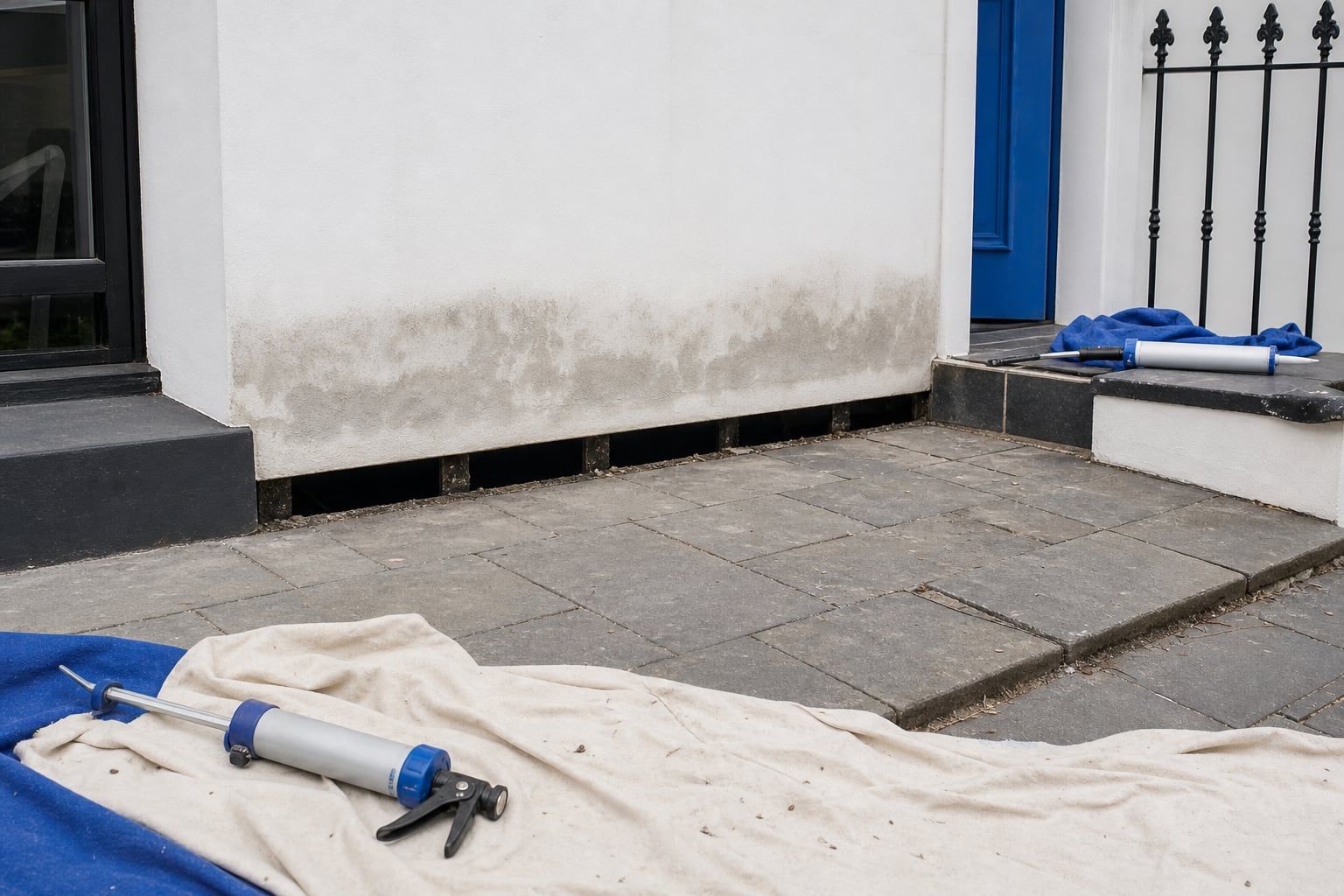
The barrier has to sit below the internal floor and above the ground outside. The Eastern Suburbs often makes that tricky: courtyards paved above the old course, front gardens built up, and streets so steep that ground level changes along a single side wall. Where paving or soil sits above the line, it needs to come down, or drainage has to go in, or water will go around the barrier. Our guide on damp courtyards and basements explains why.
In strata buildings
Walk-up flats from the 1920s and 30s often have rising damp in ground-floor units. Injection suits most of these buildings, and because the walls are usually common property, the owners corporation decides on the work. We provide a written diagnosis and quote for the committee. See damp in Art Deco flats for more.
After the injection
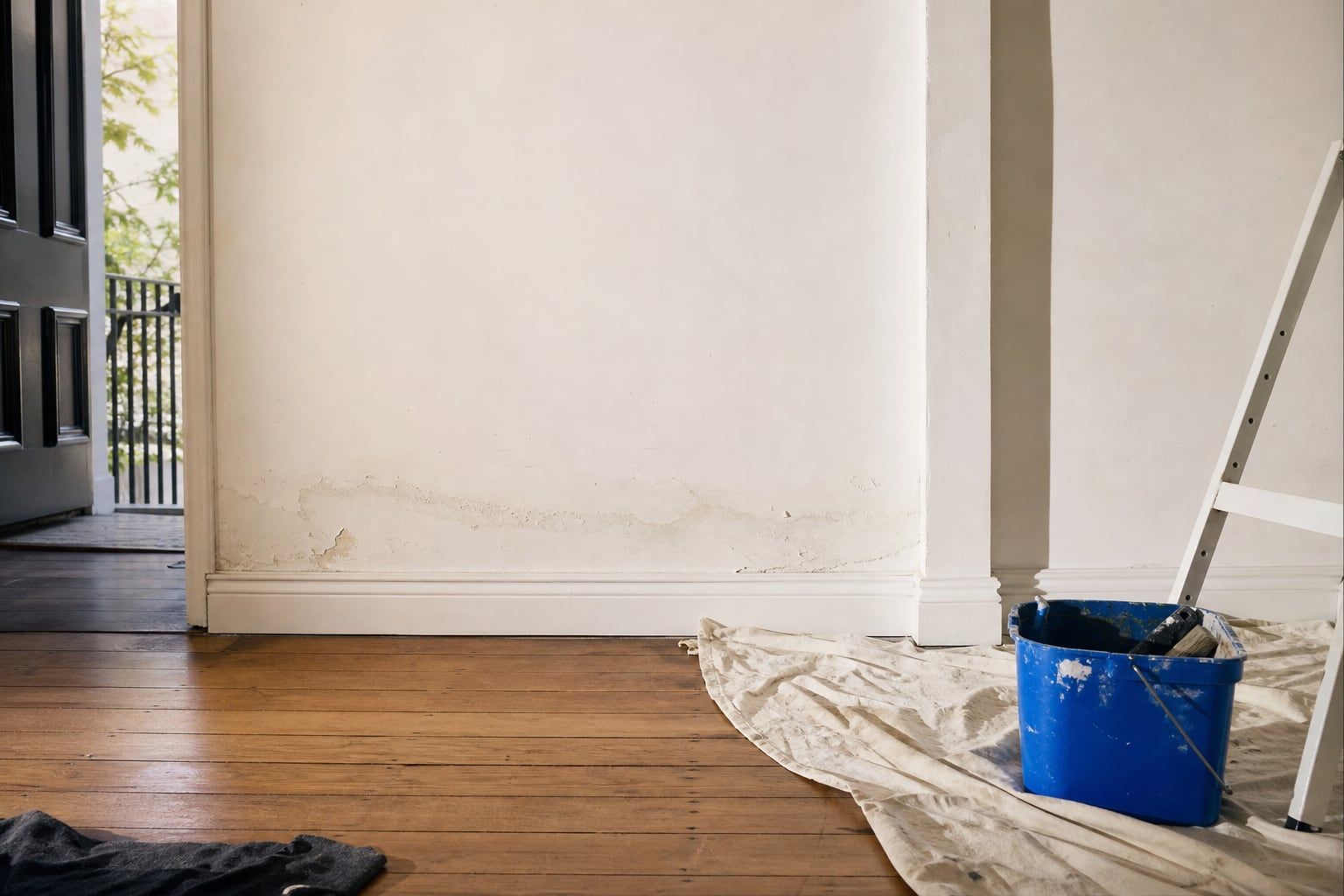
The wall above the barrier is still damp and full of salt. The plaster on it will keep blistering until it’s replaced, so every quote includes replastering damp walls with a salt-tolerant render, applied once the brick has dried enough.
For how injection fits into a full repair, see rising damp treatment.
Updated
What good chemical damp course looks like
Chemical Damp Course across the Eastern Suburbs
Chemical Damp Course in the Eastern Suburbs: step by step
- Find the jointA continuous mortar bed is chosen below the floor line and above any outside ground or paving.
- Drill the mortarHoles are drilled into the joint at even spacing, deep enough for the wall's full thickness.
- InjectDamp-proofing cream is pumped into each hole and spreads to form a continuous barrier.
- Close upHoles are filled to match and the damaged plaster is replaced once the wall has dried.
Chemical Damp Course guides for Eastern Suburbs homeowners
Chemical Damp Course questions in the Eastern Suburbs
Something else on your mind? Call and ask.
Can a party wall be injected from one side?
Usually, yes. We drill most of the way through from your side so the barrier forms across the full thickness. If the neighbour's side is also damp, they may want to treat theirs at the same time.
Will the holes show on face brick?
They go into the mortar joint, not the brick, and are filled with mortar matched to the existing colour. On a street-facing wall we can often drill from inside instead.
Can you inject a wall that's been rendered outside?
Yes, we drill through the render into the mortar behind it. If the render has been taken down below ground level and is bridging the course, we'll cut it back too.