Damp courtyards and basements: water against Eastern Suburbs walls
How raised courtyards, sloping sites and sandstone put water against Eastern Suburbs walls above the damp course, and the drainage and tanking that fix it.
Damp courtyards and basements cause more wet walls in the Eastern Suburbs than many people expect. When we’re called to a terrace or a building with “rising damp”, the water is often coming from the side, not from below: a rear courtyard that sits higher than the floor, a basement cut into sandstone, or a below-ground room on a steep block. A damp course alone can’t stop that water, and treating it as rising damp often leaves people disappointed.
Courtyards
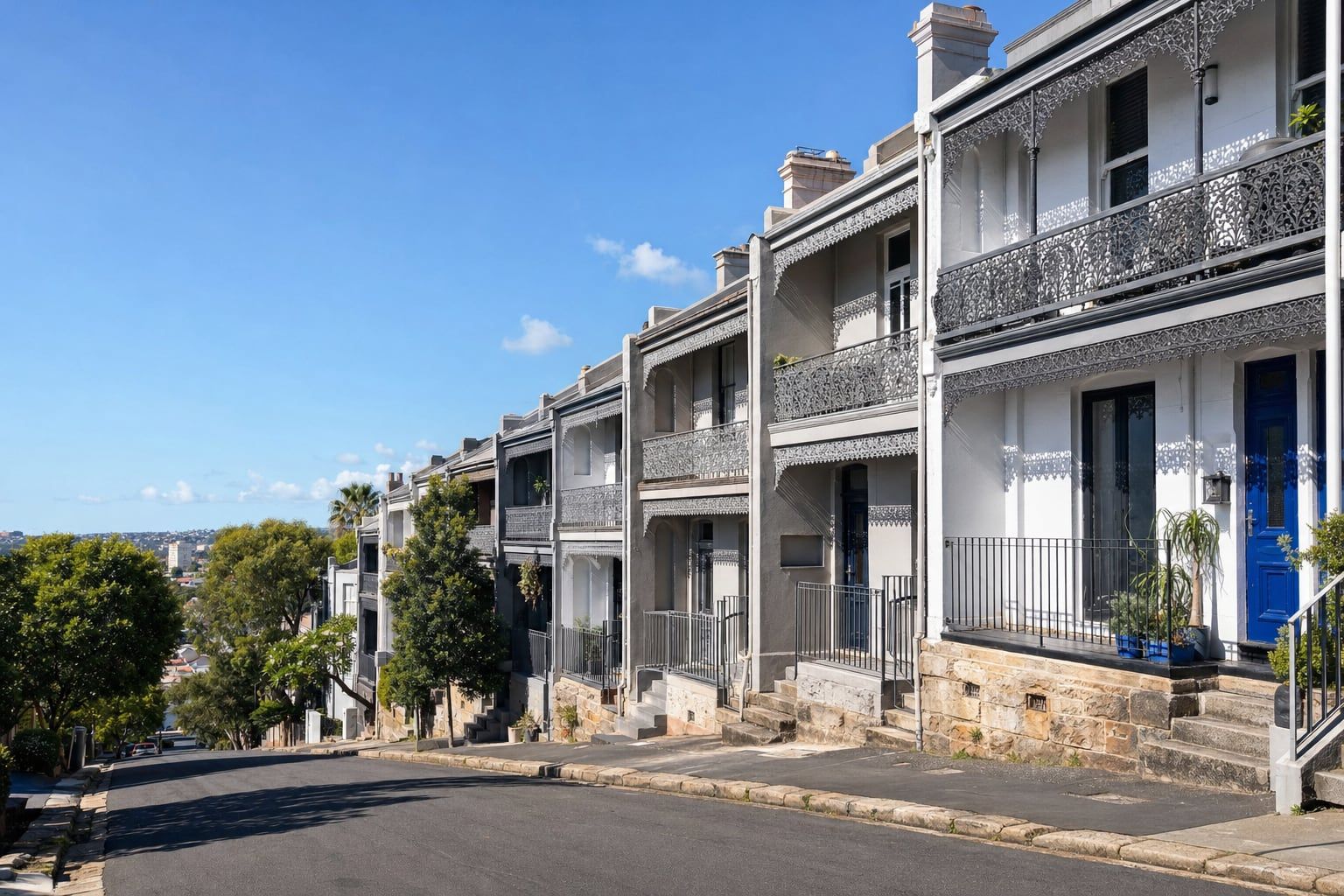
Almost every Victorian and Federation terrace in Paddington, Woollahra, Darlinghurst, Surry Hills and Redfern has a small rear courtyard. They’re also common behind semis and cottages in Waverley, Randwick and Kensington.
Most have been paved more than once. Old bricks or sandstone flags get covered with concrete, the concrete gets tiled, the tiles get replaced with pavers. Each layer goes on top of the last. Over a century, the courtyard surface can rise well above where it started, and above the house’s original damp course.
At the same time, many courtyards were laid with little thought for drainage. They fall toward the back wall, or they’re flat with a single grate that blocks with leaves. Downpipes often discharge straight onto the paving.
The result is that every rainfall puts water against the back wall, above the damp course. It soaks in, and the rooms at the back of the house, usually the kitchen, laundry and bathroom, show damp, salt and peeling paint.
Fixing a courtyard
Lower it. Removing the built-up layers so the surface sits below the damp course is the most effective fix. Even a small drop along the wall can make a big difference.
Regrade it. New paving laid to fall away from the house moves water toward a drain rather than the wall.
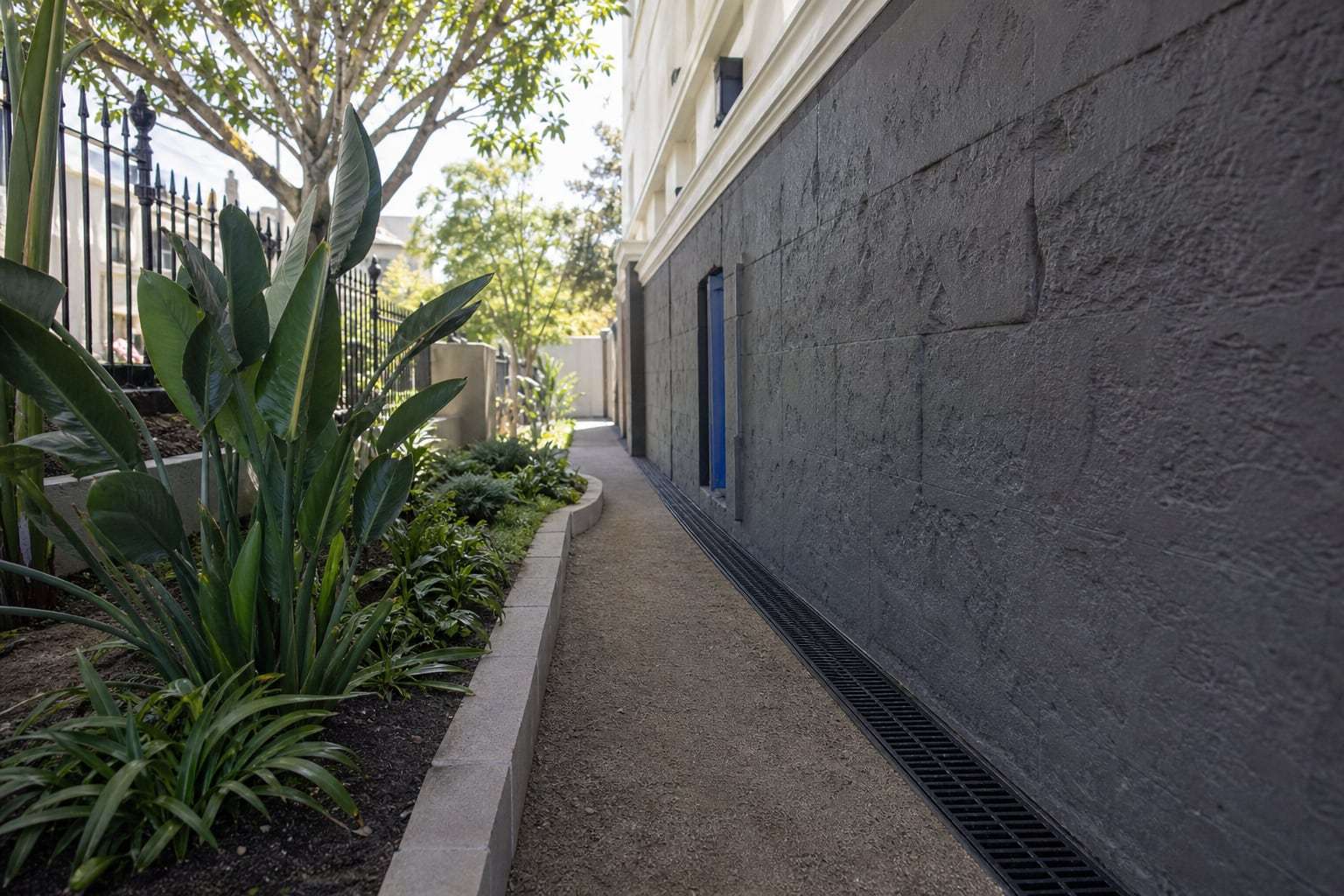
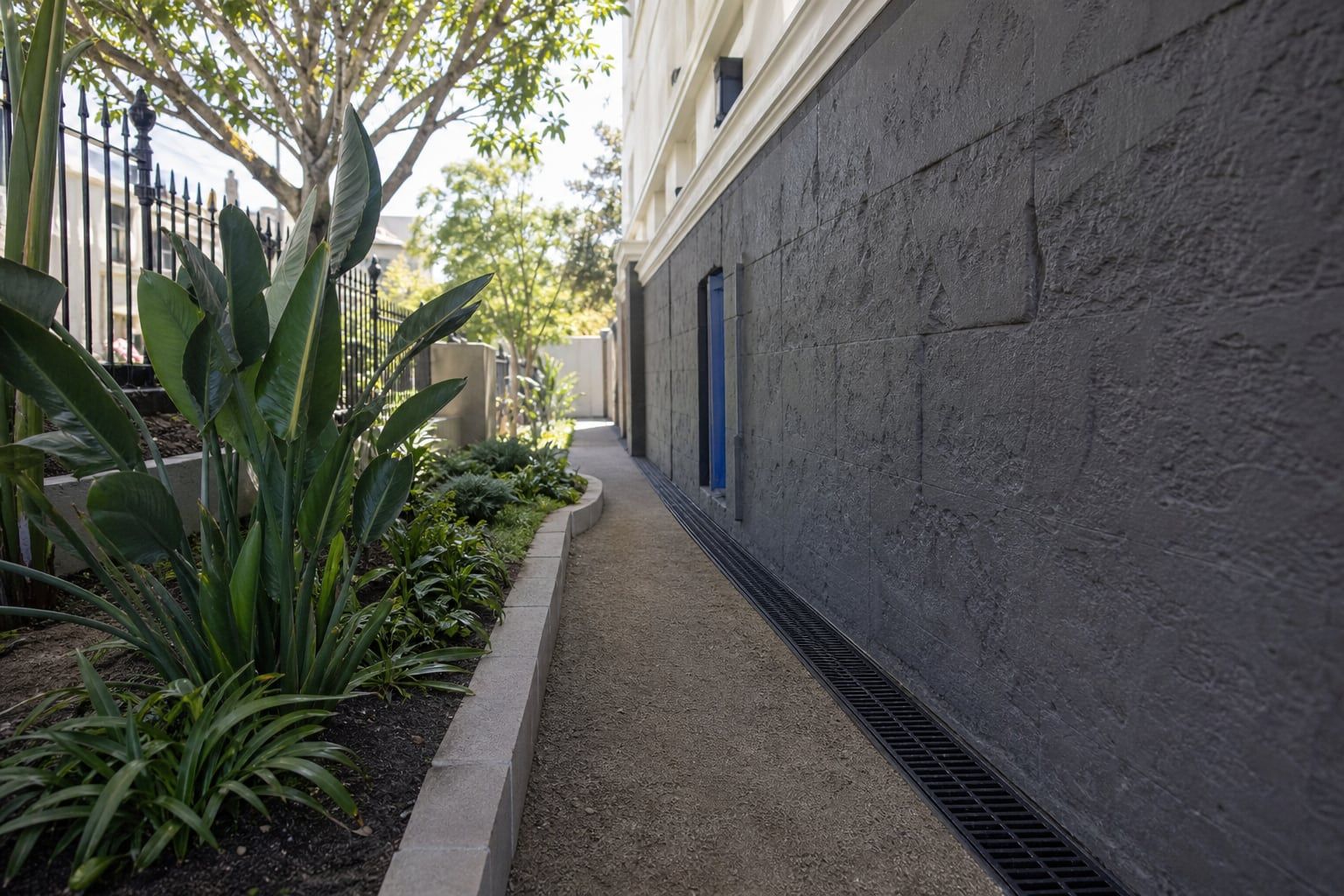
Drain the wall. A channel drain along the base of the back wall, connected to the stormwater, catches water before it soaks in. Where the paving can’t be lowered right at the wall, a strip of gravel over a drain can separate the paving from the brick.
Connect the downpipes. Downpipes should run into the stormwater, not onto the courtyard.
Our page on tanking and drainage covers how these are done.
Basements and below-ground rooms
The Eastern Suburbs sits largely on sandstone, and the streets running down to the harbour and the ocean are steep. Many buildings in Bellevue Hill, Vaucluse, Rose Bay, Edgecliff, Double Bay, Bronte and Clovelly have a basement, cellar, garage or lower room cut into the hill.
Water soaks through the sandy soil after rain until it reaches the sandstone, then runs along the top of the rock. Walls cut into the slope sit in its path. Those walls get wet from the side, sometimes up to the full height of the ground outside, and in heavy rain some actually weep.
Fixing a basement
Drain behind the wall where possible. If the outside of the wall can be reached, a drain behind it carries water away before it presses against the wall.
Tank the inside. In most basements the outside can’t be reached. A tanking system on the inside face, a cementitious waterproof coating or membrane built up in layers and taken around corners and onto the floor, stops water coming through. It’s then rendered or lined so the room can be finished.
Manage the water that collects. Some basements also need a floor drain or a small sump to deal with water that reaches the base of the walls.
How to tell side damp from rising damp
Where it is. Courtyard damp affects the back wall. Basement damp affects walls against the ground. Rising damp affects the base of walls all around.
How high it goes. Rising damp usually fades out below about a metre. Damp from soil or paving can go as high as the ground outside.
When it’s worst. Rising damp is fairly steady. Courtyard and basement damp clearly gets worse after rain.
Many buildings have both, and the plan needs to cover each part. Our rising damp treatment page explains how we diagnose them.
The subfloor connection
A courtyard that drains toward the house also puts water into the subfloor under the back rooms. Once the water is redirected, subfloor ventilation helps the crawl space and the timber dry out.
Getting it checked
We read each damp wall, look at the courtyard levels and falls, check drainage and downpipes, and inspect any basement or below-ground room. Then we explain what’s causing the damp and what it will take to fix. See our page on rising damp symptoms for what to look for, or our overview of Eastern Suburbs rising damp for how we work.
Updated
Damp courtyards and basements: common questions
Something else on your mind? Call and ask.
How do I know if my courtyard is above the damp course?
Look at the base of the back wall. If you can see a slate or dark line in a mortar joint, compare it with the paving. If the paving is level with it or higher, water is getting past it. Often the course isn't visible at all because the paving covers it.
Can't I just seal the courtyard paving?
Sealing stops water soaking into the pavers, but it still runs off onto the wall. What matters is the level and fall of the courtyard and where the water drains.
Is a damp basement a structural risk?
Usually it's a damp problem rather than a structural one. If we see cracking, bulging walls or signs of movement, we'll recommend an engineer looks at it.
Waterproof Tanking and Drainage in the Eastern Suburbs
More guides for Eastern Suburbs homeowners
- Rising damp in terraces: why Eastern Suburbs terraces stay damp and how to fix themHow Victorian and Federation terraces were built, why so many now have damp walls, and how to repair them without losing their character.
- Damp in Art Deco flats: ground-floor units, strata and getting it fixedWhy ground-floor units in the Eastern Suburbs' older apartment blocks get damp walls, who is usually responsible, and how to move a repair forward.