Physical Damp Course Eastern Suburbs
A physical barrier slid into the wall a short length at a time, for walls injection won't seal.
A physical damp course is a solid membrane put into the wall to cut off water rising from the footing. In the Eastern Suburbs we use it mostly on the oldest buildings: Victorian terraces and cottages on sandstone footings, walls built of soft early brick, and houses where an earlier injection hasn’t worked.
Which buildings need it
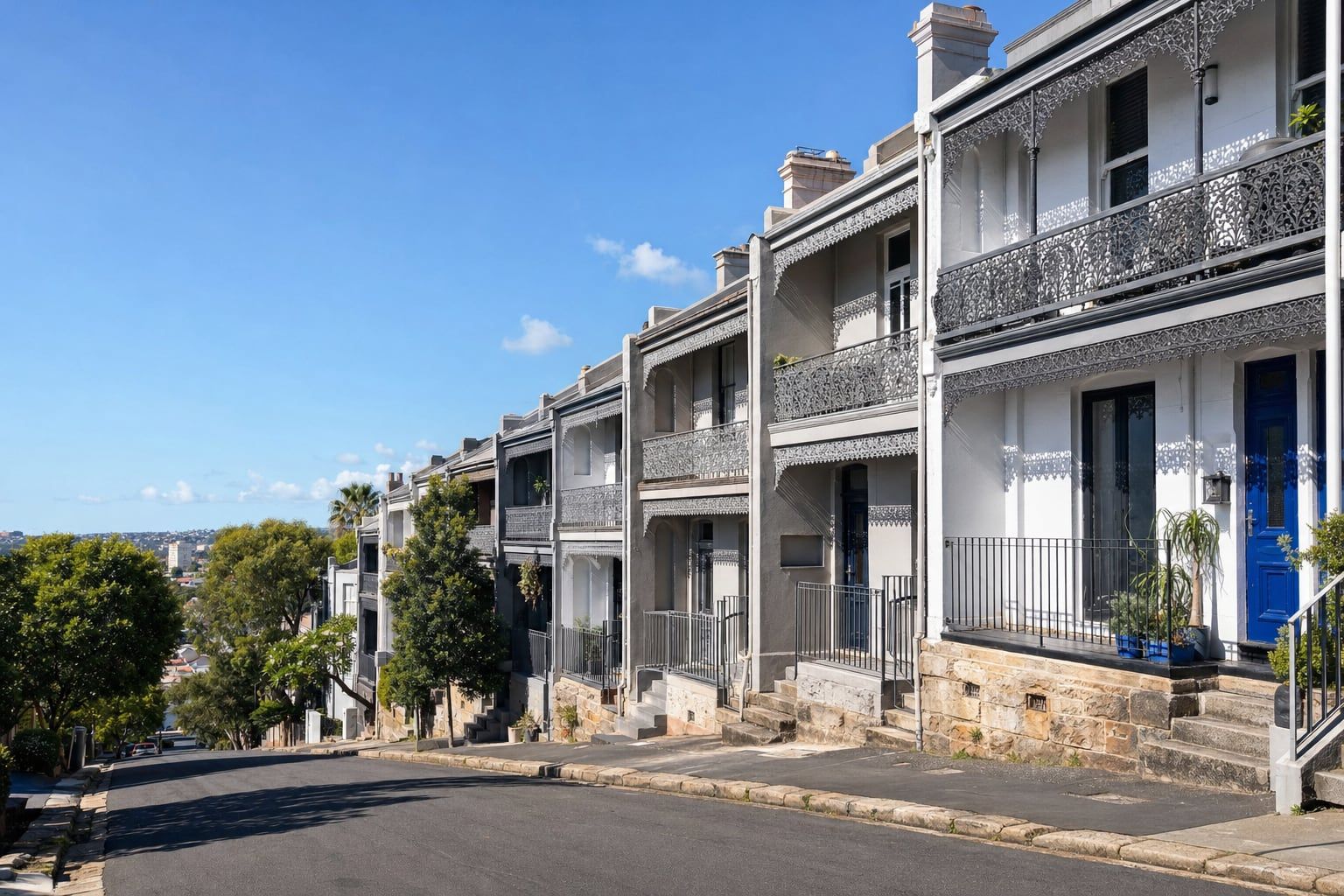
The terraces that line the streets of Paddington, Darlinghurst, Woollahra and Surry Hills date mostly from the 1870s to the 1890s. Many were built on footings of local sandstone, and some have a sandstone base course visible along the bottom of the front wall. Bricks of that era were often soft and absorbent. Older cottages around Waverley, Randwick and Double Bay can have similar construction.
Injected cream doesn’t spread evenly through sandstone or very soft brick, and it can’t bridge the voids in rubble footings. A damp course injection relies on a sound, continuous mortar joint; where that isn’t there, a membrane is more reliable.
How it goes in
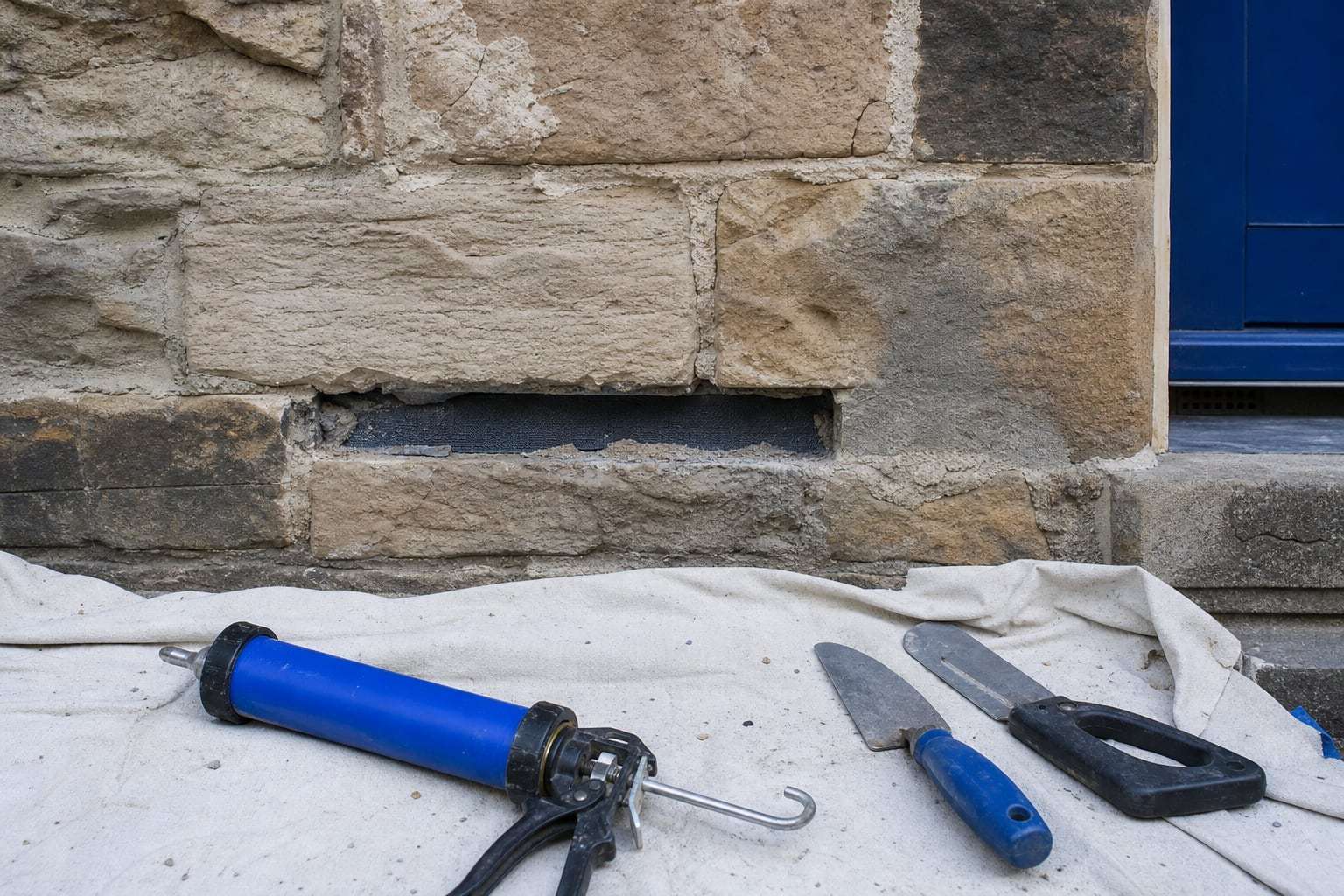
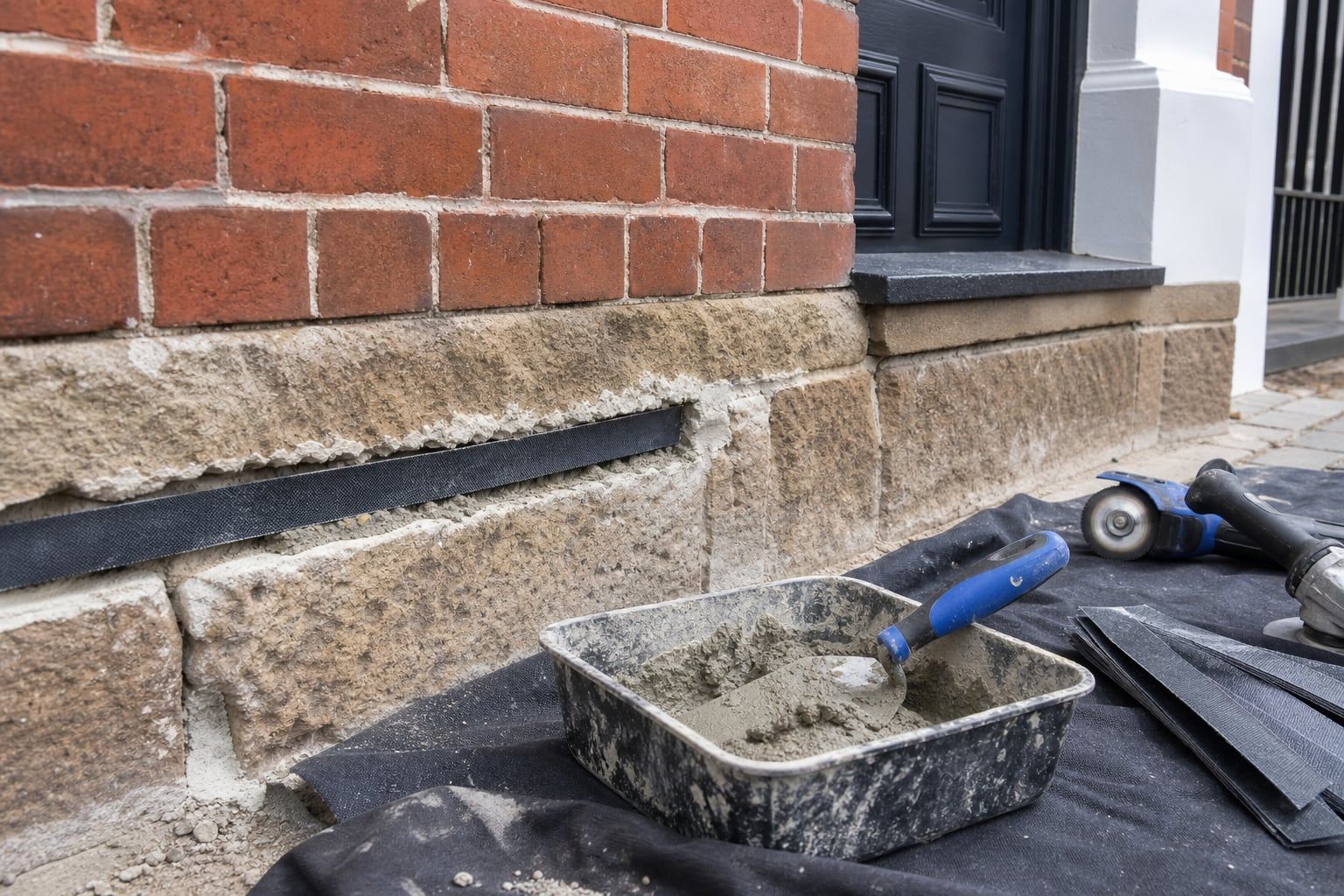
We work in short lengths so the wall is always supported. A section of the chosen joint is cut out or raked out, a damp-proof membrane is fed through, and the slot is packed solid with lime mortar. Once it’s fully packed, the next length is opened, with the membrane lapped well past the last one.
On a terrace this is usually done from inside the rooms and from the rear courtyard, since the front often sits right on the footpath and there’s no side access. Party walls are worked from your side.
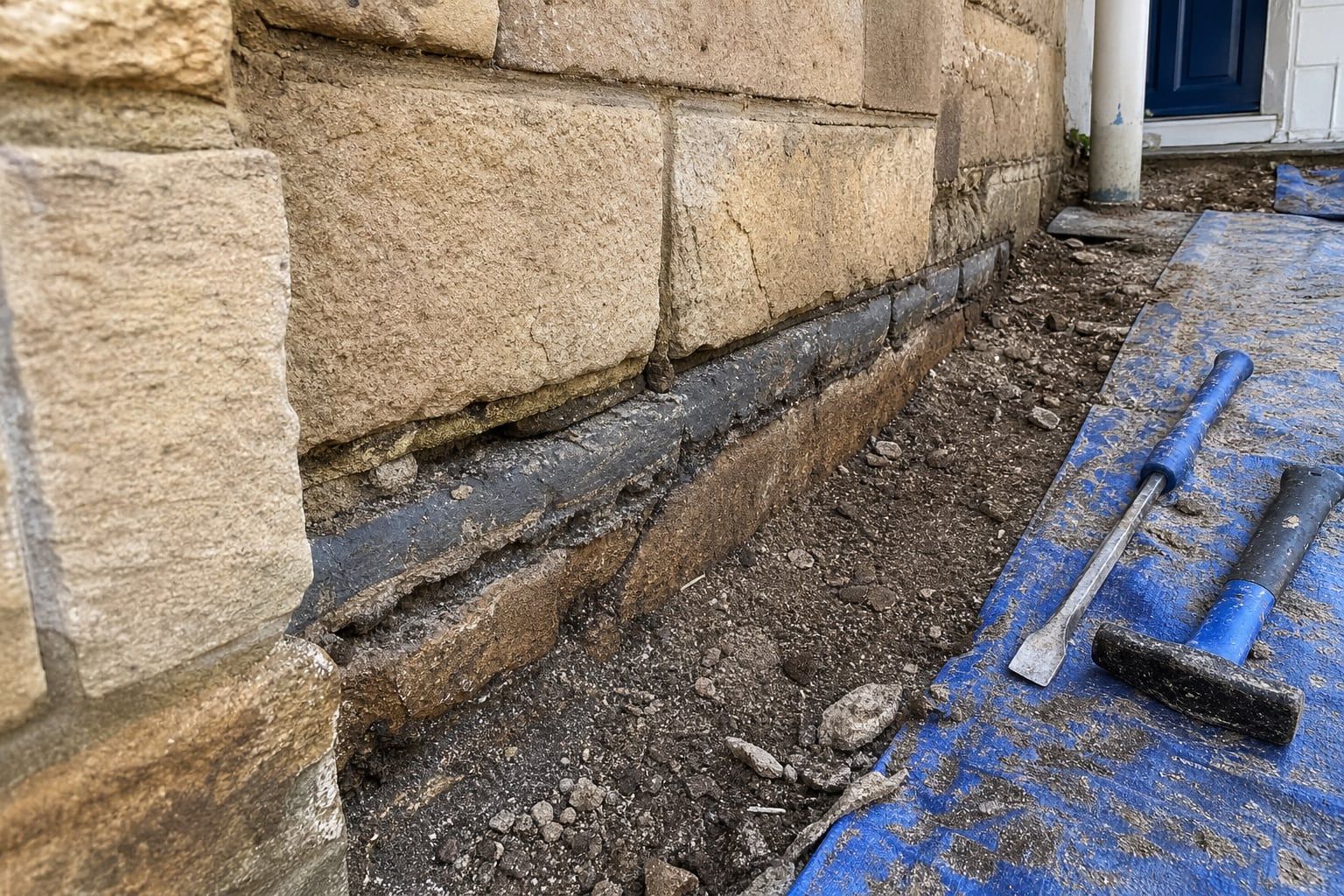
The height of the course is critical. It must sit below the internal floor and above whatever is outside, which in a terrace usually means the rear courtyard paving and sometimes the footpath at the front. On sloping streets, the course may need to step.
Stone dries slowly
Sandstone holds a lot of water. Once the membrane is in, a stone base wall can take many months to dry. We plan the finish around that: damaged plaster is removed and replaced with a breathable, salt-resistant render that lets the wall keep drying through its surface. Hard cement renders and impermeable paints trap moisture in stone and should be avoided.
Courtyards and basements
A membrane stops water rising, but not water pressing in from the side. Terraces with a rear courtyard paved above the old course, and buildings with a basement or semi-basement cut into sandstone, often need drainage or tanking as well. Our page on tanking and drainage covers that, and our guide on damp courtyards and basements explains why it’s so common here.
Heritage considerations
Much of Paddington, Woollahra and Darlinghurst is covered by heritage conservation areas. A membrane course with lime mortar is generally well suited to original masonry, because it doesn’t rely on chemicals soaking into the fabric and the repair is compatible with old materials. If your building is in a conservation area or listed, check with council whether the work needs approval; we can provide a written method statement.
Our guide to rising damp in terraces covers older terraces in more depth, and rising damp treatment explains how the full repair comes together.
Updated
What good physical damp course looks like
Physical Damp Course across the Eastern Suburbs
Physical Damp Course in the Eastern Suburbs: step by step
- Plan the lineWe set the course height relative to floors, courtyard paving and the slope of the street.
- Open a short lengthA short section of joint is cut or raked out, keeping the wall above supported.
- Lay the membraneDamp-proof membrane is fed in and lapped well past the previous length.
- Pack tightLime mortar is packed into the slot before the next length is opened.
Physical Damp Course guides for Eastern Suburbs homeowners
Physical Damp Course questions in the Eastern Suburbs
Something else on your mind? Call and ask.
Is my terrace on sandstone?
Many of the earliest terraces in Paddington, Darlinghurst and Woollahra sit on footings of local sandstone, sometimes with a stone base course visible above ground. We confirm what's there during the diagnosis.
Can it be done on a shared wall?
Yes, with care. Work on a party wall is done from your side in short lengths, and we'll tell you if it's worth talking to your neighbour first.
Why lime mortar instead of cement?
Lime is softer and more breathable than sandstone or old brick, so the wall can keep drying and any future movement is taken in the joint rather than cracking the stone.