Rising damp in terraces: why Eastern Suburbs terraces stay damp and how to fix them
How Victorian and Federation terraces were built, why so many now have damp walls, and how to repair them without losing their character.
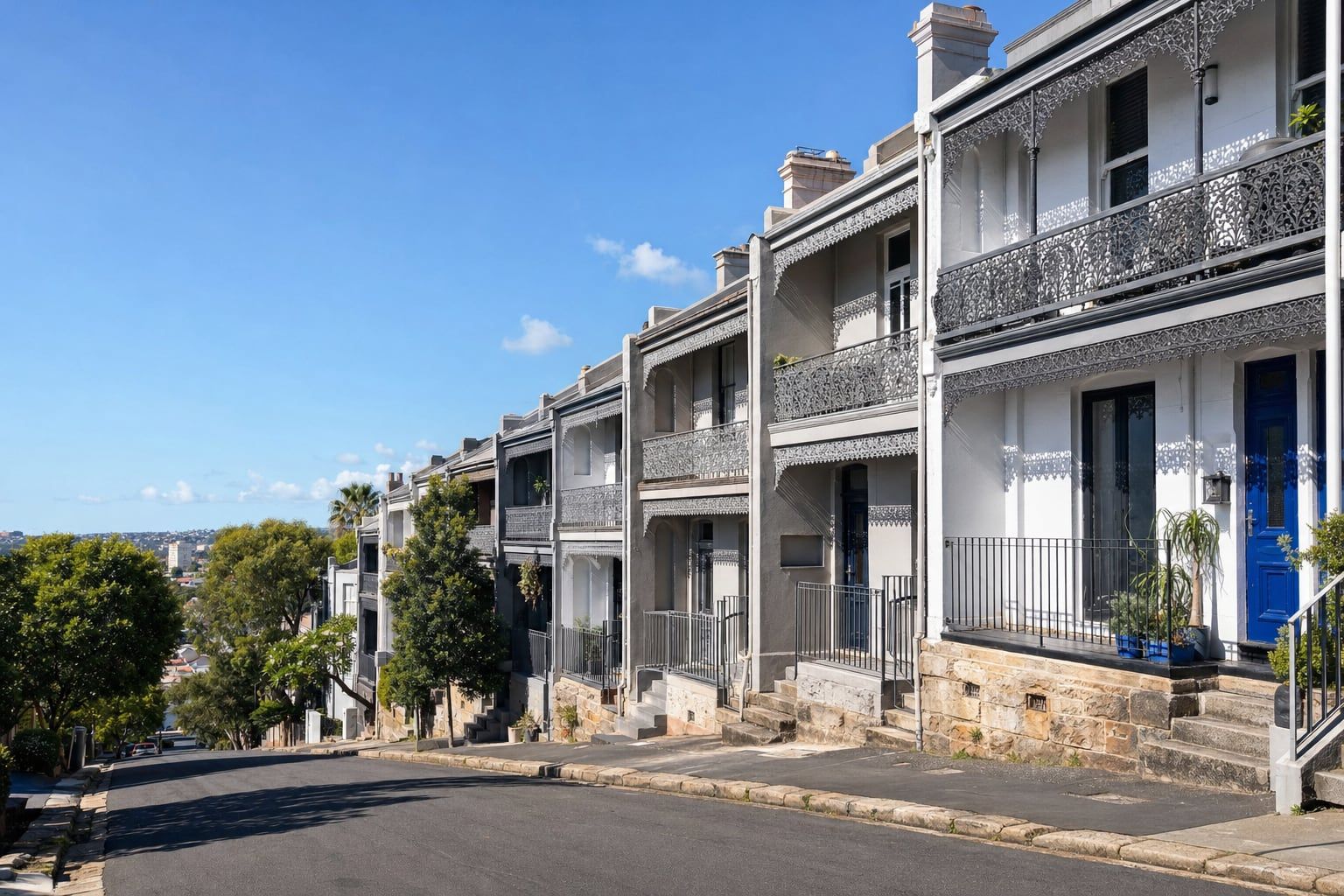
Rising damp in terraces is one of the most common problems we see in the Eastern Suburbs. Paddington, Woollahra, Darlinghurst, Surry Hills, Redfern and the older pockets of Waverley and Randwick have thousands of Victorian and Federation terraces, most built between the 1860s and the 1910s. They’re some of Sydney’s most loved houses, and almost all of them have, or have had, damp at the base of their walls.
This guide explains why terraces are so prone to damp, what usually makes it worse, and how to repair them without losing what makes them special.
How terraces were built
Terraces were built quickly and in rows, often by the same builder along a whole street. Walls were generally solid brick, sometimes on footings of local sandstone. Bricks of the period were often soft, and mortar was lime-based. Inside, walls were finished with lime plaster. Floors were timber on joists over a shallow subfloor, with vents at the front and back.
Damp courses varied. Some terraces had slate laid in a mortar joint, some had bitumen or tarred felt, and some of the earliest had little or none. Where a course was installed, it’s now well over a century old.
Why they get damp
Old or missing damp courses. Slate cracks as the building settles, and bitumen and felt break down. Water rises through the gaps.
Raised courtyards. The rear courtyard is the single biggest cause we see. Courtyards have usually been paved several times, each layer over the last. Many now sit above the original course and fall toward the house. Rain soaks straight into the back wall. Our guide on damp courtyards and basements covers this in detail.
Party walls. Terraces share walls with their neighbours. A damp problem in one house often runs through to the next, and the party walls themselves can carry moisture along the row.
Still subfloors. With party walls on both sides, air can only enter the subfloor from the front and back. In a long terrace it barely moves, and the space under the floor stays humid.
Modern finishes. Many terraces were replastered with gypsum and painted with acrylic during the twentieth century. Those finishes trap moisture and salt, so damage shows much faster than it did in the original lime plaster.
Render taken to the ground. Where front walls have been rendered in cement right down to the footpath, the render bridges the damp course and stops the base of the wall drying.
Sloping streets. Terraces step down hills, each house a little lower than its neighbour. Water moves through the sandy ground and along the sandstone toward the lower houses.
What the damp looks like
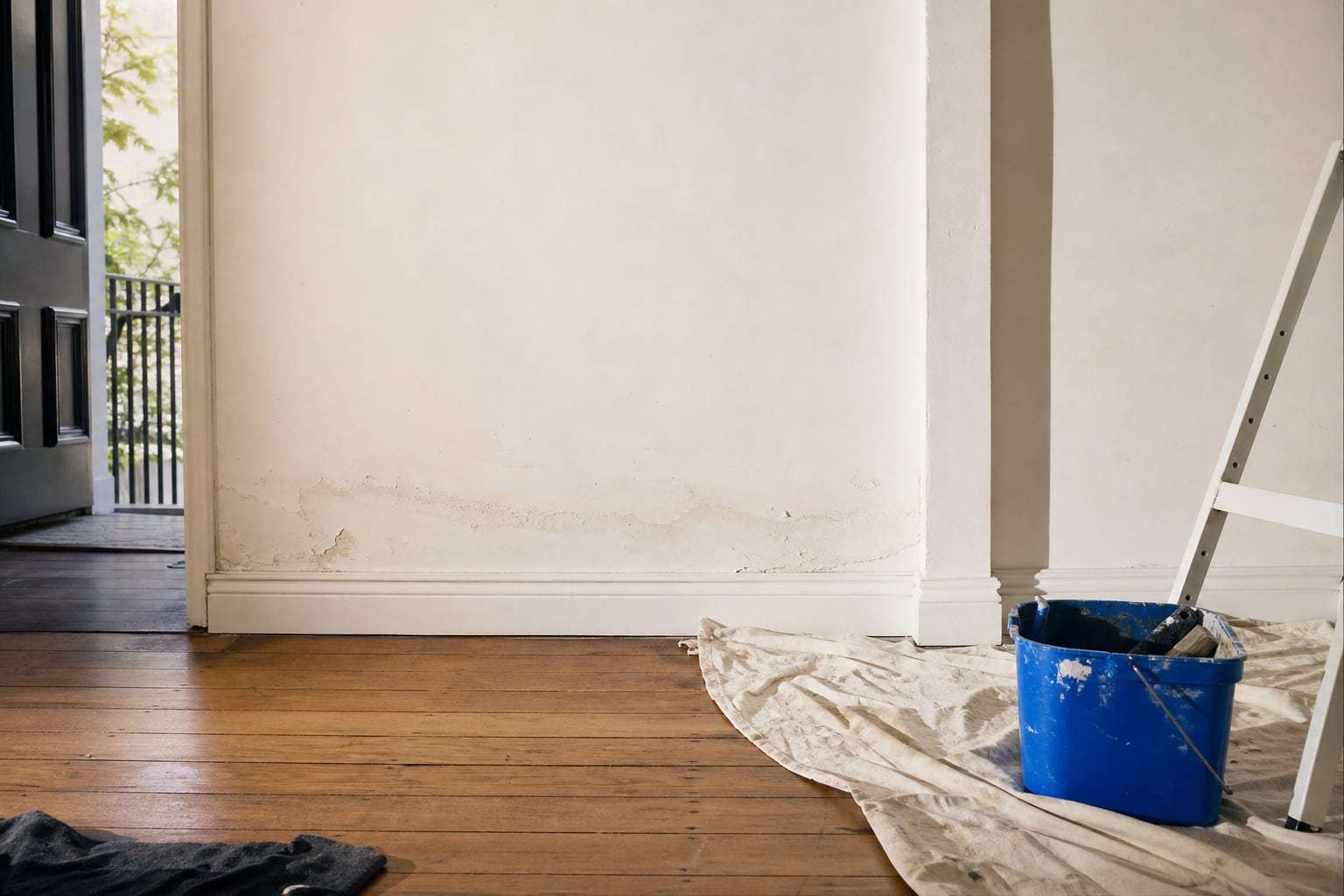
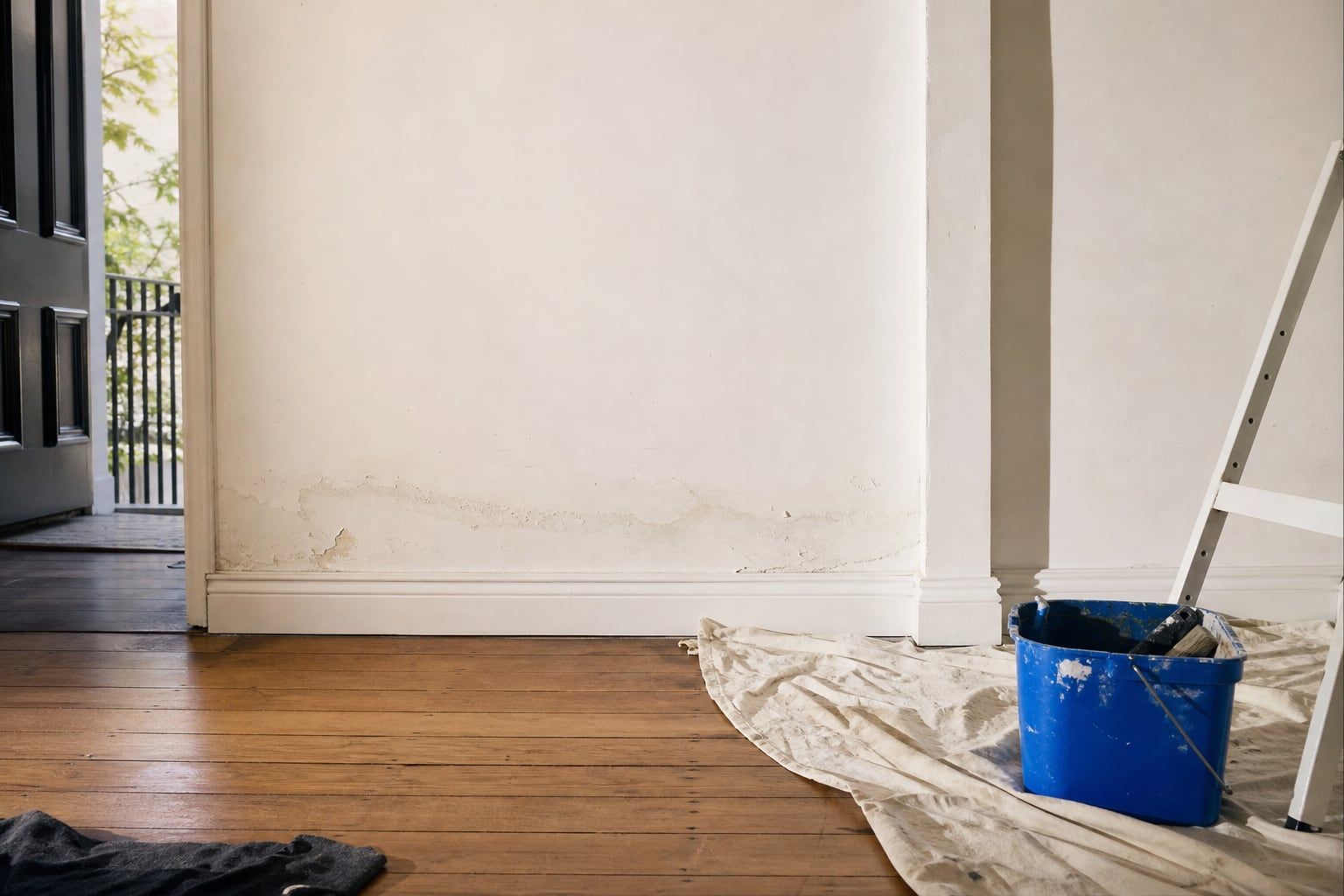
In a terrace, damp usually shows first in the rooms at the back, the kitchen, laundry and bathroom closest to the courtyard, and along the party walls. Paint blisters, plaster crumbles, skirtings rot and there’s often a musty smell. In the front rooms, damp along the base of the front wall is common where the footpath or front garden has been raised.
Repairing a terrace properly
Start outside. Lowering and regrading the rear courtyard, adding a drain along the back wall and cutting back render bridging the course at the front are often the most effective first steps. See tanking and drainage.
Put in a new barrier where it’s needed. Brick walls with sound mortar can take an injected course. Walls on sandstone footings or built of soft early brick are better suited to a physical damp course installed in short lengths and repacked with lime mortar. Party walls can usually be treated from your side.
Get air under the floor. Clearing front and rear vents and, where needed, fitting quiet fans to pull air through the length of the subfloor helps the whole house dry out.
Replace the damaged plaster with something compatible. Salt-damaged plaster has to go. Replacing it with a breathable, salt-tolerant render rather than gypsum gives the wall a chance to keep drying. Where sound lime plaster survives, it should be kept. Our page on salt-damaged plaster repair explains the process.
Heritage and terraces
Much of Paddington, Woollahra, Darlinghurst and Surry Hills is within heritage conservation areas. Damp repairs that use compatible materials and keep original fabric generally suit those areas well, but it’s worth checking with council before work that affects the street front. We can provide a written method statement.
Working in a terrace
Terraces have tight access: no side passage, a front door on the footpath and narrow stairs. We work from inside and from the courtyard, protect floors, stairs and period details, and plan the work so only part of the house is affected at a time.
Getting it diagnosed
Because terraces can be damp for several reasons at once, the first step is a proper diagnosis. We read each wall, check the courtyard, front, party walls and subfloor, and explain what’s going on. Our page on rising damp treatment covers how the job runs, and our overview of Eastern Suburbs rising damp explains our approach. If you’re still working out what you’re seeing, start with signs of rising damp.
Updated
Rising damp in terraces: common questions
Something else on your mind? Call and ask.
Do all old terraces have rising damp?
No, but a large share show some damp at the base of the walls. Whether it's true rising damp, courtyard water or a damp subfloor varies from house to house, which is why diagnosis matters.
My neighbour fixed their damp. Will mine get worse?
Not as a rule. A new barrier in your neighbour's half of a party wall doesn't push water into yours. But if you share the problem, treating both sides at once is usually more effective.
Should I remove the render from the front of my terrace?
Only if it's damaged or bridging the damp course. Many terraces were originally face brick or stucco; if cement render has been taken down to the footpath, cutting it back above ground level can help the wall dry.
Rising Damp Treatment in the Eastern Suburbs
More guides for Eastern Suburbs homeowners
- Damp in Art Deco flats: ground-floor units, strata and getting it fixedWhy ground-floor units in the Eastern Suburbs' older apartment blocks get damp walls, who is usually responsible, and how to move a repair forward.
- Damp courtyards and basements: water against Eastern Suburbs wallsHow raised courtyards, sloping sites and sandstone put water against Eastern Suburbs walls above the damp course, and the drainage and tanking that fix it.